Chronic Denial

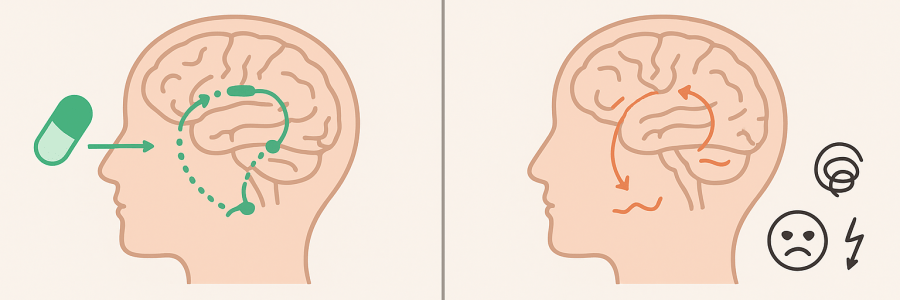
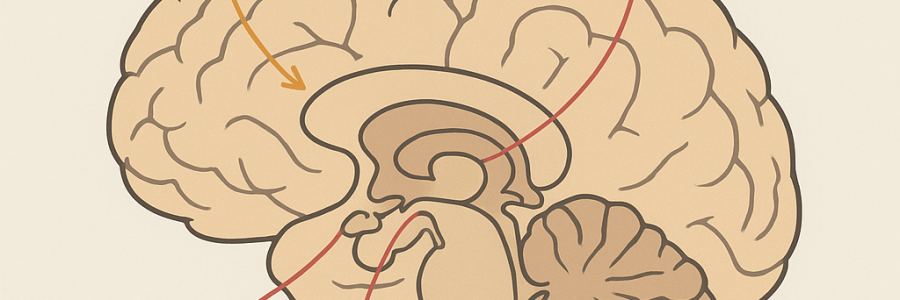
Here is a clear, neuroscience‑grounded explanation of what happens in the brain when someone lives in constant denial, grandiosity, entitlement, and reality‑distortion, especially with beliefs like: This pattern has predictable neural and psychological mechanisms. 🧠 Neuroscience of Denial, Grandiosity & Reality Distortion Chronic denial and inflated self‑beliefs are not random — they arise from specific neural circuits interacting with psychological… Read More Chronic Denial

Psychological entrapment

Negative self‑talk, catastrophising, or repeatedly saying “I’m dying / I’m sick / something terrible will happen” does NOT cause cancer, disability, or physical disease. That is not how biology works. However… What is true — and strongly supported by neuroscience — is that repeatedly telling yourself catastrophic health stories can: So let’s separate science from fear very clearly. ✅ What Repeated Catastrophic Self-Talk Does 1. Rewires your… Read More Psychological entrapment

Your Thoughts, Actions, and Beliefs Shape Your Reality — A Neuroscience View

What you’re pointing toward is neuroplasticity:the brain literally rewires itself based on the thoughts you repeat, the stories you tell, and the actions you take. This creates a kind of self‑fulfilling loop that can either protect you or harm you, depending on what you reinforce. Here’s how the science explains it: 1. The Brain Believes What You Repeatedly… Read More Your Thoughts, Actions, and Beliefs Shape Your Reality — A Neuroscience View

Behavioral Choice Pathways: Neuroscience of Deliberate Actions

Here’s a neuroscience-informed explanation of behavioral choice pathways, specifically in the context of abusive or manipulative behavior. This framework emphasizes that abuse is a deliberate, neurologically reinforced choice rather than a symptom or accident. 1. Key Brain Circuits Involved Brain Region Function in Behavioral Choice Implication for Abuse Prefrontal Cortex (PFC) Executive function, planning, decision-making, inhibition Enables abuser… Read More Behavioral Choice Pathways: Neuroscience of Deliberate Actions

Medication, Behavior, and Abuse: Choice and Responsibility

Here’s a neuroscience-informed explanation addressing the relationship between medication, behavioral regulation, and abusive behavior, framed in terms of choice and accountability. 1. Abuse is a Choice, Not a Symptom 2. Role of Medications 3. Choosing Not to Take Medication 4. Psychological and Legal Implications Scenario Neuroscience Insight Accountability Abuse while on medication Reward circuits still drive pleasure from… Read More Medication, Behavior, and Abuse: Choice and Responsibility

Abuse: Choice vs Misconception of Mental Illness

Here’s a clear, neuroscience- and psychology-informed explanation distinguishing abuse as a deliberate choiceversus the common misconception that abuse is caused by mental illness, stress, or emotional instability. This is suitable for educational, clinical, or legal contexts. Abuse: Choice vs Misconception of Mental Illness Aspect Abuse as a Deliberate Choice Misconception: Caused by Mental Illness / Stress / Instability… Read More Abuse: Choice vs Misconception of Mental Illness

Abuse as a Deliberate Behavioral Pattern: A Neuroscience and Psychology Perspective

Introduction Abuse is often misunderstood in popular discourse as the result of stress, mental illness, or poor emotional regulation. Neuroscience and psychology research increasingly clarify that abuse is a conscious, deliberate behavior aimed at power and control rather than an accident or symptom. Understanding the underlying mechanisms helps survivors, professionals, and the legal system recognize patterns, predict… Read More Abuse as a Deliberate Behavioral Pattern: A Neuroscience and Psychology Perspective

Self-Assessment Questions: Am I Co-Dependent?

Here’s a self-reflection guide with questions to help you assess whether you might exhibit co-dependent patterns. These are grounded in psychology and behavioral science. Answer honestly, in a non-judgmental way — this is for self-awareness, not diagnosis. Self-Assessment Questions: Am I Co-Dependent? 1. Relationship Dynamics 2. Emotional Regulation 3. Self-Identity and Self-Worth 4. Patterns in Relationships 5. Boundaries… Read More Self-Assessment Questions: Am I Co-Dependent?

Co-Dependent Individuals: Neuroscience and Psychology

Co-dependency refers to a pattern where an individual consistently prioritizes others’ needs over their own, often to the point of emotional, psychological, or even physical detriment. It’s commonly observed in relationships with emotionally unavailable, abusive, or high-conflict partners. 1. Brain Mechanisms in Co-Dependency A. Reward System Dysregulation B. Emotional Regulation C. Attachment Circuitry D. Stress Response… Read More Co-Dependent Individuals: Neuroscience and Psychology