How to Disengage Without Guilt

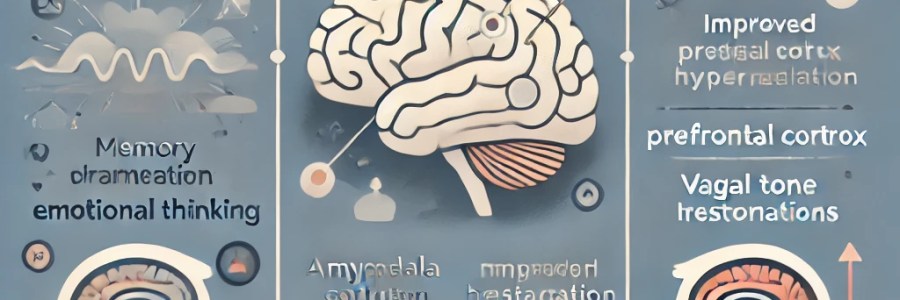
1. Reframe What You’re Doing (This Is Key) Guilt comes from a false belief: “I’m abandoning someone.”The truth is: you’re stopping unpaid emotional labour. In healthy relationships, care is reciprocal.When it isn’t, stepping back is self-protection, not cruelty. Neuroscience note: Guilt is often a conditioned response driven by the amygdala (threat/shame). When you reframe the story, the prefrontal cortex regains… Read More How to Disengage Without Guilt

What Emotional Freeloading Looks Like

Emotional freeloading is when someone takes emotional support, care, attention, or stability from another person without giving it back, taking responsibility, or showing genuine empathy in return. It’s not a clinical diagnosis, but it’s a very accurate psychological description of a pattern many people recognise instantly once they’ve lived it. What Emotional Freeloading Looks Like An emotional freeloader: They… Read More What Emotional Freeloading Looks Like

A Breath of Fresh Air: Why Meeting the Right People Restores Your Faith in Humanity

Every now and then, someone walks into your life and reminds you that not all humans are chaotic, exhausting, or emotionally under-evolved.A calm, intelligent, good-looking man.A relaxed evening.No drama.No hidden agenda.Just connection. It’s astonishing how something so simple can feel like oxygen when you’ve been living under emotional rubble. 1. Your Nervous System Responds to… Read More A Breath of Fresh Air: Why Meeting the Right People Restores Your Faith in Humanity

Why Domestic Violence — and the Court Process — Takes Such a Heavy Toll on the Mind and Body

People think the trauma ends when you leave.But anyone who has lived it knows: the legal process can feel like Round Two.It’s not just stressful — it’s biologically exhausting. 1. Living in Survival Mode Damages the Nervous System Domestic abuse keeps your brain in a chronic fight-or-flight state.The amygdala becomes overactive.The nervous system stays hyper-alert.Cortisol floods your… Read More Why Domestic Violence — and the Court Process — Takes Such a Heavy Toll on the Mind and Body

Why Smart, Strong People Fall for the Façade at First

People often ask, “How did you not see it?”But the truth is: the façade is designed to be believable. It’s engineered — psychologically and neurologically — to bypass your instincts. Here’s why so many people fall for it: 1. The Brain Trusts Consistency, Not Honesty The human brain is wired to detect patterns.If someone consistently presents themselves… Read More Why Smart, Strong People Fall for the Façade at First

“It Didn’t Take My Psychologist Long to See It”: The Neuroscience Behind Denial in Abusive Behaviour

It’s almost laughable how quickly a trained psychologist can see through someone like him.The patterns aren’t subtle. They’re predictable. They’re textbook.It’s not rocket science — unless you’re blind to it, or emotionally invested in the fantasy instead of the truth. But his denial?That’s where the neuroscience gets interesting. 1. Denial Isn’t Ignorance — It’s a Brain-Based Defense Mechanism… Read More “It Didn’t Take My Psychologist Long to See It”: The Neuroscience Behind Denial in Abusive Behaviour

When Someone Says One Thing Publicly and Does Another Privately: The Neuroscience Behind the Double Life

It’s astonishing how some people can present one story to their family — “I’m going to sell the house,” “I’m doing the right thing,” “Everything is fine” — while living a completely different reality behind closed doors.Nothing ever changes. The promises shift, the words get softer, but the behaviour stays the same. And when someone performs one role for… Read More When Someone Says One Thing Publicly and Does Another Privately: The Neuroscience Behind the Double Life

Abuse and the Holidays: Why Vigilance Matters

Abuse doesn’t take a holiday — in fact, it often intensifies during holidays like Christmas or birthdays. Many victims think that leaving home, going on a trip, or being away from daily stress might protect them, but abuse thrives in isolation. Abusers exploit distance from friends, family, and familiar environments to gain control. After 32 Christmases of living… Read More Abuse and the Holidays: Why Vigilance Matters

Abuse doesn’t take a holiday

Abuse doesn’t take a holiday — in fact, it often intensifies during holidays like Christmas or birthdays. Many victims think that leaving home, going on a trip, or being away from daily stress might protect them, but abuse thrives in isolation. Abusers exploit distance from friends, family, and familiar environments to gain control. After 32 Christmases of living… Read More Abuse doesn’t take a holiday