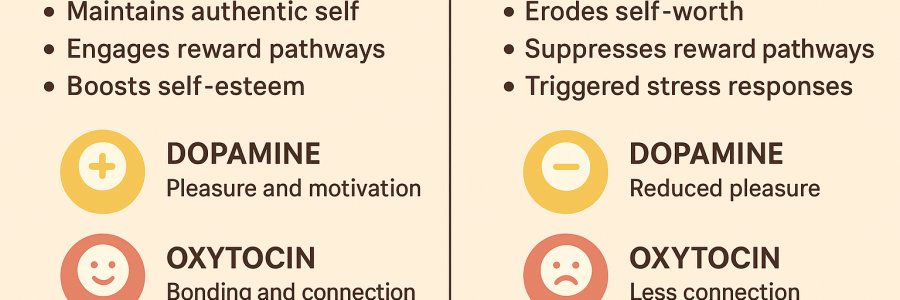
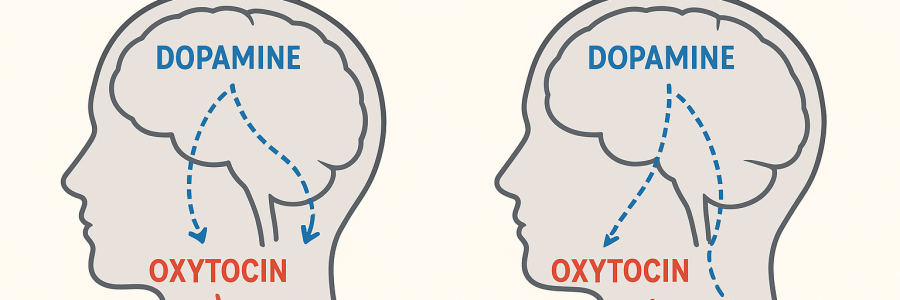
The Neuroscience of Manipulative Touch: When Affection Becomes Control

Touch is one of the most powerful forms of human communication. A gentle hand on the shoulder, a comforting hug, or a warm embrace can lower stress hormones, release oxytocin (the “bonding hormone”), and strengthen emotional connection. But neuroscience also shows that touch can be used in darker, more self-serving ways — as a tool… Read More The Neuroscience of Manipulative Touch: When Affection Becomes Control

What the research tells us about dating at 60+

1. Prevalence and patterns Implication: Dating later in life is not the norm for everyone, but it is sufficiently common that it’s receiving scholarly attention. 2. Neuroscience and romantic connection Implication: The neurobiology suggests that even after long relationships one can still experience deep romantic or bonding feelings; thus, entering a new dating phase later… Read More What the research tells us about dating at 60+

“Intermittent engagement” or “hot-cold behavior”

“Intermittent engagement” or “hot-cold behavior” in psychology. Let’s break down why this happens from a neuroscience and psychological perspective. 1️⃣ The Behavior: Mixed Signals and “Dangling” When someone says they want to see you but doesn’t follow through, or claims they’ll call tomorrow but disappears, it creates uncertainty and anxiety. This is a form of inconsistent reinforcement — a psychological… Read More “Intermittent engagement” or “hot-cold behavior”

💖 The Science of a Thriving Relationship: Passion, Trust, and Connection

Imagine a relationship where the spark never fades, where mutual trust is rock-solid, and every conversation flows effortlessly. You’re deeply attracted to each other, yet you honor each other’s need for space. No mind games. No doubts. Just connection, respect, and undeniable chemistry. This isn’t just romantic fantasy — neuroscience and psychology show that such… Read More 💖 The Science of a Thriving Relationship: Passion, Trust, and Connection

The Power of Acceptance: Letting Your Partner Be Themselves

One of the deepest lessons in love is learning to let someone be who they are. We often enter relationships with hope that our partner will change — that certain habits, opinions, or patterns will shift to align with our own vision of a “perfect” partnership. But neuroscience and psychology show us that trying to change… Read More The Power of Acceptance: Letting Your Partner Be Themselves

One-sided or exploitative relationships

A classic pattern of one-sided or exploitative relationships, and both psychology and neuroscience give powerful insight into why these dynamics feel so draining and confusing. Here’s a breakdown that connects behaviour, brain science, and emotional impact 👇 ⚖️ 1. The Psychology of One-Sided Relationships People who make everything about what you can do for them often show traits linked to narcissistic or emotionally avoidant patterns:… Read More One-sided or exploitative relationships

 Friendship differs from a romantic relationship

Let’s look at how friendship differs from a romantic relationship, both in the mind and in the brain. 🧠 Neuroscience Perspective 1. Shared biological systems Both friendship and romantic love activate the brain’s reward circuitry — especially areas like: The difference lies in intensity and neural targets. Function Friendship Romantic Relationship Reward Activation Moderate dopamine release (comfort, joy, familiarity) Strong dopamine surge (euphoria, craving, desire)… Read More  Friendship differs from a romantic relationship