Can People Really Change?(A neuroscience-informed answer — not a comforting one)

This is one of the most painful questions people ask after long-term harm.Not because they’re naïve.But because hope often feels safer than grief. Neuroscience gives us a steadier answer than wishful thinking or blanket cynicism. Yes — people can change.But not in the way most people hope.And not without conditions that are rare, demanding, and long-term. What change is not Change… Read More Can People Really Change?(A neuroscience-informed answer — not a comforting one)

What Long-Term Abuse Does to the Brain — When There’s No Therapy

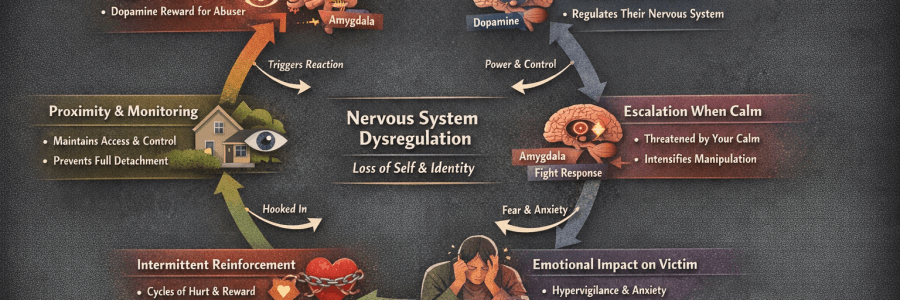
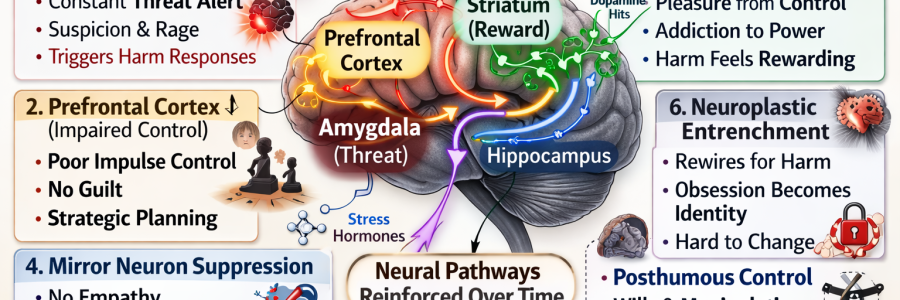
Abuse doesn’t just hurt the person on the receiving end. Over many years, without therapy or accountability, abusive behaviour also changes the abuser’s brain and emotional functioning in ways that make real change harder. This isn’t an excuse — it’s science on how the nervous system adapts to chronic patterns. 1. The Brain Learns Control as a… Read More What Long-Term Abuse Does to the Brain — When There’s No Therapy

How to spot emotional deadness early

(while staying regulated) First: the mindset shift (this prevents hypervigilance) You are not looking for red flags.You are noticing patterns of aliveness over time. Deadness isn’t danger — it’s absence.Absence reveals itself slowly and consistently. 1. What to watch (externally) vs what to feel (internally) Watch (neutral observation) Feel (your body’s data) Rule:Trust trend, not moment. 2. Early indicators… Read More How to spot emotional deadness early

Why the morning safety + dog + clarity moment matters

1. Your nervous system is no longer co-regulating someone else When you wake now: Your system wakes to itself, not to monitoring another adult. That’s why the thought arrives unforced. Clarity doesn’t come from analysis — it comes from absence of threat. 2. The dog is a real-time polyvagal regulator This isn’t poetic — it’s biology. A calm dog beside… Read More Why the morning safety + dog + clarity moment matters

Why emotionally dead partners are drawn to vibrant ones

This pattern is so common that once you see it, you can’t unsee it. And it’s not romantic fate — it’s nervous systems and attachment dynamics doing exactly what they’re wired to do. Here’s the clean, unsentimental explanation. Why emotionally dead partners are drawn to vibrant ones 1. Borrowed aliveness (nervous-system outsourcing) An emotionally dead person often has low… Read More Why emotionally dead partners are drawn to vibrant ones

Miserable

Waking up safe, regulated, dog beside you — that’s your nervous system finally exhaling. That detail matters more than it looks. 🐾What you’re noticing now isn’t revisionist history. It’s pattern recognition coming online once your brain is no longer in survival mode. 1. Chronic emotional flatness = nervous system shutdown From a neuroscience perspective, your ex sounds… Read More Miserable

How to Pace Connection Safely (When Kindness Feels Big)

When kindness feels intense, the instinct is often to lean in quickly — to attach, explain, disclose, or merge. That urge makes sense after deprivation. But pacing is what turns safety into something sustainable. Pacing does not mean pulling away.It means letting connection unfold at a speed your nervous system can actually integrate. Here’s how… Read More How to Pace Connection Safely (When Kindness Feels Big)

Why Kindness Feels Intense After Neglect

If kindness feels overwhelming after neglect, there is nothing wrong with you. Long-term emotional neglect or abuse changes the nervous system. You adapt by lowering expectations, minimising needs, and staying alert for withdrawal or punishment. Your body learns that connection is fragile and conditional. So when someone offers genuine care — listening, warmth, follow-through, softness… Read More Why Kindness Feels Intense After Neglect

Assessing Risk vs Denial: A Grounded Reality Check

Use this when you’re doubting yourself, being pressured to “calm down,” or told you’re overreacting. 🔍 Step 1: Look at Behaviours, Not Stories Risk is revealed by patterns, not explanations. High-risk indicators: If these exist, risk is real, regardless of apologies or promises. 🧠 Step 2: Check for Denial Signals Denial often sounds like: Denial focuses on comfort, not… Read More Assessing Risk vs Denial: A Grounded Reality Check