Endings Are Not “Failure Signals” to the Brain

From a neural perspective, the brain is not designed to preserve everything—it’s designed to optimize for survival, efficiency, and meaning. When something ends (a relationship, role, identity, environment), the brain initially registers: But once safety is re-established, the brain does not cling blindly. It begins a process called adaptive pruning. Just as the brain prunes unused synapses during development,… Read More Endings Are Not “Failure Signals” to the Brain

Why calm truth destabilises abusers more than anger

1. Anger keeps the abuser in control of the nervous-system dance Abusers are neurologically accustomed to high arousal states: From a brain perspective, anger keeps both people in the same threat loop.The abuser knows this terrain well — they have practiced it for years. Calm removes that loop. 2. Calm truth shuts down projection Projection only works… Read More Why calm truth destabilises abusers more than anger

From survival mode to safety mode

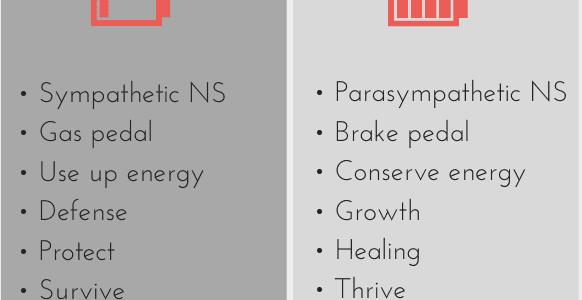
1. From survival mode to safety mode For decades, your brain and body were likely dominated by the threat system: Neuroscience shows that long-term emotional abuse keeps the amygdala (threat detector) overactive, while the prefrontal cortex (reasoning, reflection, calm decision-making) gets suppressed. What you’re feeling now — peace, wholeness, comfort — signals a shift into parasympathetic dominance, often called rest and digest.… Read More From survival mode to safety mode

Immediate nervous system reset

Putting yourself first after disengaging from someone who is dumping distressing information is essential for nervous system recovery. Here’s a structured, neuroscience- and psychology-informed plan for grounding and stabilizing yourself in the days immediately after: 1. Immediate nervous system reset 🔹 Deep breathing 🔹 Grounding with senses 🔹 Body scan 2. Protect your digital space 3. Structure your… Read More Immediate nervous system reset

Why blocking and stopping contact protects your sanity (neuroscience & psychology)

🧠 1. Your brain did not consent to this role Unsolicited disclosure recruits your nervous system without permission. Neuroscience: You are closing an open stress loop. 🧠 2. Ongoing contact creates “false responsibility” Psychology shows that once contact continues, the brain begins to feel: Even if you intellectually reject this, your nervous system doesn’t. Blocking prevents role… Read More Why blocking and stopping contact protects your sanity (neuroscience & psychology)

Practical and safe approach

Passing the information to your psychologist and discussing it is generally a very safe and effective choice, from both psychology and neuroscience perspectives, because it allows you to process the material without carrying it alone, and it protects your nervous system. Here’s the reasoning: 1. Psychologists are trained containers for trauma 2. Processing without absorbing responsibility 3.… Read More Practical and safe approach

Why you should NOT pass details to their family

1. Families are not neutral containers Psychology shows that families are emotionally invested systems, not objective recipients of information. Common outcomes: Neuroscience: This means facts are rarely processed rationally. 2. You become the messenger — and the target Passing information to family shifts your role from: Psychologically, this exposes you to: Your nervous system absorbs stress that does not… Read More Why you should NOT pass details to their family

Should you pass the information to your lawyer?

Yes, if ALL of the following are true: Your lawyer’s role is precisely to hold information so you don’t have to. Why this is protective (neuroscience & psychology) 🧠 1. Cognitive offloading This is healthy delegation, not avoidance. 🧠 2. Containment reduces trauma activation Uncontained information keeps trauma circuits “open.” A lawyer provides: Your nervous system needs closure,… Read More Should you pass the information to your lawyer?

You are not refusing truth — you are refusing harm

✅ DO — Protect yourself while acting responsibly 🧠 Nervous system first 📩 Communication 📁 Information handling ⚖️ Responsibility 🌱 Aftercare 🚫 DON’T — Avoid what harms recovery ❌ Engagement ❌ Emotional load ❌ Cognitive traps ❌ Role confusion ❌ Self-betrayal thoughts to notice (not obey) These are trauma-conditioned empathy reflexes, not obligations. 🧩 One-sentence response… Read More You are not refusing truth — you are refusing harm

Disturbing information

Here is a clear, trauma-informed, neuroscience-aligned way to react when someone you barely know contacts you with a disclosure about your ex — something you didn’t want to know, but that should be reported. This approach protects your nervous system, your legal position, and the integrity of the information. 1. Regulate first — before responding Do nothing immediately. Neuroscience: What to do… Read More Disturbing information