🧠 NEUROSCIENCE: HOW THE BRAIN OF A CHRONIC LIAR WORKS
1. Reduced Gray Matter in the Prefrontal Cortex Research using MRI scans (e.g., Yang et al., British Journal of Psychiatry, 2005) found that habitual liars have less gray matter in the prefrontal cortex — the brain’s honesty and moral reasoning hub.👉 This means poorer impulse control, ethical judgment, and empathy regulation. 2. Overactive Reward Circuitry The nucleus accumbens and ventral tegmental area (VTA) — the brain’s reward… Read More 🧠 NEUROSCIENCE: HOW THE BRAIN OF A CHRONIC LIAR WORKS

🧠 Neuroscience & Psychology of Abusive Family Systems

When an entire family becomes abusive — locking you out, controlling finances, stalking, sending threats — this reflects a collective dysfunction of empathy, power, and fear.From both neuroscience and psychology, several key mechanisms explain this: 1. Collective Trauma & Learned Behavior In many abusive families, destructive patterns are learned, repeated, and reinforced over generations. Each family member unconsciously plays… Read More 🧠 Neuroscience & Psychology of Abusive Family Systems

Synaptic Pruning: How the Brain Lets Go to Grow

When we talk about “letting go” emotionally, it often feels abstract — like advice easier said than done. But your brain actually knows how to let go at a biological level. This process is called synaptic pruning, and it’s one of the key ways your brain adapts, learns, and evolves throughout your life. What Is Synaptic Pruning? Your… Read More Synaptic Pruning: How the Brain Lets Go to Grow

What Felt Like an Ending Was Really the Making of You: The Neuroscience of Renewal

There are moments in life when everything seems to fall apart — the relationship ends, the job disappears, the familiar world collapses. It feels like death, not in the physical sense, but in the deep emotional sense of losing everything that once gave you identity, meaning, and belonging. Yet, neuroscience shows that what feels like… Read More What Felt Like an Ending Was Really the Making of You: The Neuroscience of Renewal

💭 “You Don’t Miss What You Never Had”

The Psychology and Neuroscience of Absence, Longing, and Emotional Imprinting We often hear the phrase “you don’t miss what you never had” — and on the surface, it sounds simple.But in psychological and neurological terms, this truth carries layers of meaning about attachment, emotional learning, and the brain’s relationship with experience. 🧠 The Brain Only Grieves What It… Read More 💭 “You Don’t Miss What You Never Had”

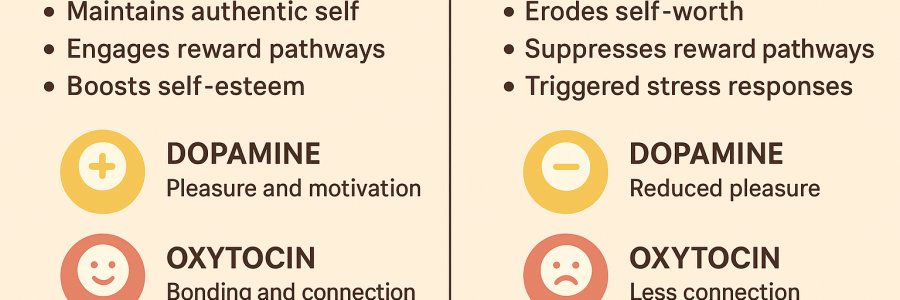
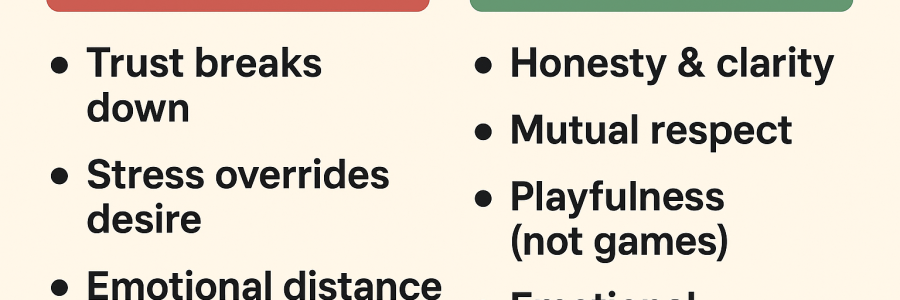
When People Won’t Communicate and Play Games

The Neuroscience and Psychology Behind Emotional Avoidance Few things are more confusing or draining than dealing with someone who refuses to communicate directly — who plays mind games, gives mixed signals, or shuts down instead of being honest. It’s not just frustrating; it’s emotionally destabilizing. Neuroscience shows why these patterns affect us so deeply and… Read More When People Won’t Communicate and Play Games

Real People

It can really feel like they’re rare these days, especially when most interactions seem filtered, performative, or transactional. Neuroscience and psychology can actually shed light on why “real” people feel so scarce: 1. Social Conditioning and Cultural Pressures 2. Neurobiology of Trust and Vulnerability 3. Why They Stand Out 4. Where to Find Them The good… Read More Real People

The Neuroscience of Authenticity: Why Bullshitting a Psychologist Doesn’t Work

When someone tries to create a false impression—through charm, exaggeration, or rehearsed emotion—it might fool the average observer. But psychologists and trained clinicians are rarely deceived for long. Their training and intuition are grounded in an understanding of neural, emotional, and behavioral cues that reveal when something doesn’t add up. 1. The Brain and Authentic Emotion Authenticity… Read More The Neuroscience of Authenticity: Why Bullshitting a Psychologist Doesn’t Work