Can People Really Change?(A neuroscience-informed answer — not a comforting one)

This is one of the most painful questions people ask after long-term harm.Not because they’re naïve.But because hope often feels safer than grief. Neuroscience gives us a steadier answer than wishful thinking or blanket cynicism. Yes — people can change.But not in the way most people hope.And not without conditions that are rare, demanding, and long-term. What change is not Change… Read More Can People Really Change?(A neuroscience-informed answer — not a comforting one)

What Long-Term Abuse Does to the Brain — When There’s No Therapy

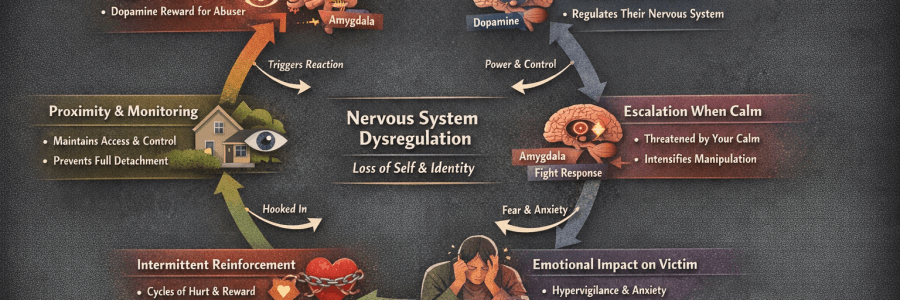
Abuse doesn’t just hurt the person on the receiving end. Over many years, without therapy or accountability, abusive behaviour also changes the abuser’s brain and emotional functioning in ways that make real change harder. This isn’t an excuse — it’s science on how the nervous system adapts to chronic patterns. 1. The Brain Learns Control as a… Read More What Long-Term Abuse Does to the Brain — When There’s No Therapy

The Brain and Trust Violations: What Happens When Trust is Broken

Trust is a core part of relationships. But what happens in our brains when someone betrays that trust? A 2022 study gives us some answers. What the Study Did Researchers looked at how the brain reacts when trust is violated — for example, when someone fails to keep a promise or acts dishonestly. Using brain… Read More The Brain and Trust Violations: What Happens When Trust is Broken

Trust and Aliveness Toolkit

Part 1: Early-Dating Personal Compass “This isn’t about judging anyone or protecting myself from imagined danger.It’s about staying connected to me while letting someone show me who they are.” I don’t rush.I don’t scan.I notice patterns — calmly. 🌅 After spending time together, I pause and ask Without analysing or explaining: (Only the pattern over time matters.)… Read More Trust and Aliveness Toolkit

Repairing Misattunement: How Healthy Partners Build Trust

1. Recognize the rupture Healthy partners notice when connection breaks or tension arises, even subtly: Key: Awareness is the first step toward repair. 2. Take responsibility (without blame) Repair is about owning impact, not being perfect: Key: You feel seen; trust rises when accountability is visible. 3. Apologize and validate Even a brief acknowledgment signals safety: Key: Emotional attunement… Read More Repairing Misattunement: How Healthy Partners Build Trust

Early-Dating Personal Compass

Why this exists “This isn’t about judging anyone or protecting myself from imagined danger.It’s about staying connected to me while letting someone show me who they are.” I don’t rush.I don’t scan.I notice patterns — calmly. 🌅 After spending time together, I pause and ask Without analysing or explaining: (Only the pattern over time matters.)… Read More Early-Dating Personal Compass

How to spot emotional deadness early

(while staying regulated) First: the mindset shift (this prevents hypervigilance) You are not looking for red flags.You are noticing patterns of aliveness over time. Deadness isn’t danger — it’s absence.Absence reveals itself slowly and consistently. 1. What to watch (externally) vs what to feel (internally) Watch (neutral observation) Feel (your body’s data) Rule:Trust trend, not moment. 2. Early indicators… Read More How to spot emotional deadness early

Why the morning safety + dog + clarity moment matters

1. Your nervous system is no longer co-regulating someone else When you wake now: Your system wakes to itself, not to monitoring another adult. That’s why the thought arrives unforced. Clarity doesn’t come from analysis — it comes from absence of threat. 2. The dog is a real-time polyvagal regulator This isn’t poetic — it’s biology. A calm dog beside… Read More Why the morning safety + dog + clarity moment matters