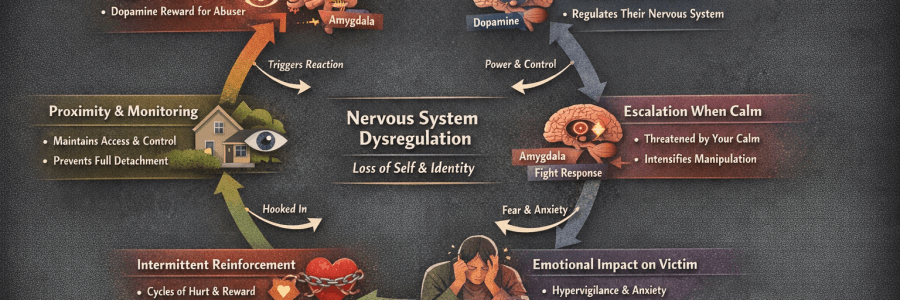
From Silence to Power: Survivors Reclaim Their Story

Survivors don’t just endure.They strategize.They adapt.They survive in systems that try to erase them. When hidden journals, unsent letters, or old records finally come into the light — whether in therapy or through personal reflection — something extraordinary happens: Survival becomes sovereignty.Pain becomes power.Silence becomes voice. In trauma psychology, writing to someone who ignores you… Read More From Silence to Power: Survivors Reclaim Their Story

When survivors finally bring the hidden evidence into the light

There comes a moment in trauma recovery when silence is no longer protection —it becomes a weight. Sometimes, that moment arrives through forgotten backups, old journals, letters never answered, or words written in desperation when being heard felt impossible. These records are not weakness.They are proof of survival. In trauma psychology, repeatedly writing to someone who… Read More When survivors finally bring the hidden evidence into the light

Choosing EMDR after strangulation and psychological abuse is not recovery — it is reclamation.

Strangulation is one of the most dangerous and psychologically devastating forms of assault.It directly impacts the brain’s fear system, memory processing, emotional regulation, and sense of safety. But survival rewires the brain for endurance.Healing rewires it for freedom. EMDR allows trauma to be reprocessed so it no longer controls the nervous system, emotions, identity, or self-worth. This… Read More Choosing EMDR after strangulation and psychological abuse is not recovery — it is reclamation.

Why Emotional Neglect Is Often More Damaging Than Overt Abuse

Overt abuse is visible.Emotional neglect is invisible — and that is what makes it so damaging. When abuse happens, the nervous system knows something is wrong. Pain is acknowledged. Boundaries become necessary. Survival instincts activate. But emotional neglect is different. It teaches a person that their feelings do not matter, their needs are inconvenient, and their existence requires… Read More Why Emotional Neglect Is Often More Damaging Than Overt Abuse

Emotional Neglect

Emotional neglect occurs when: Writing letters pouring your heart out — and having them ignored or thrown away — is a classic example of emotional neglect. Psychological meaning: “My inner world does not matter.” Over time, this deeply impacts: 2️⃣ Unidirectional Emotional Labour This describes the effort of emotional expression and relationship maintenance happening only on one side. You… Read More Emotional Neglect

How Survivors Rebuild Identity After Psychological Erosion

Psychological erosion happens slowly. It is not one event — it is thousands of small moments of: Over time, the nervous system adapts to survival, and identity becomes secondary. 🧩 Phase 1: Survival Identity (Before Healing) When someone lives in chronic emotional stress, the brain prioritises safety over authenticity. This creates a survival self: Neurologically: So identity slowly erodes: You stop… Read More How Survivors Rebuild Identity After Psychological Erosion

The Four Horsemen of Relationship Breakdown (Gottman Method)

John Gottman identified four communication patterns that predict relationship failure with over 90% accuracy.They are called The Four Horsemen because once they dominate a relationship, emotional safety collapses. These four patterns are: 1️⃣ Criticism – Attacking the person, not the behaviour What it sounds like: Psychological impact: Criticism attacks identity, not actions.It tells the nervous system: “You are the problem.” Neuropsychology: Criticism activates… Read More The Four Horsemen of Relationship Breakdown (Gottman Method)

Neuroscience & Psychology Perspective – living in a parallel universe

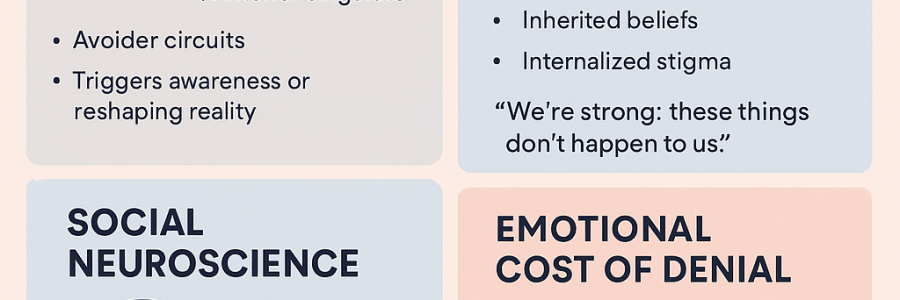
1. Cognitive Dissonance & Denial Systems (on their side) If his relatives are still sending cards addressed to Mr & Mrs, 17 months after separation, this strongly suggests: In simple terms: Their brains are protecting them from discomfort by freezing reality in time. 2. Family System Psychology — “Homeostasis” In family psychology, systems resist change. When a long-term… Read More Neuroscience & Psychology Perspective – living in a parallel universe