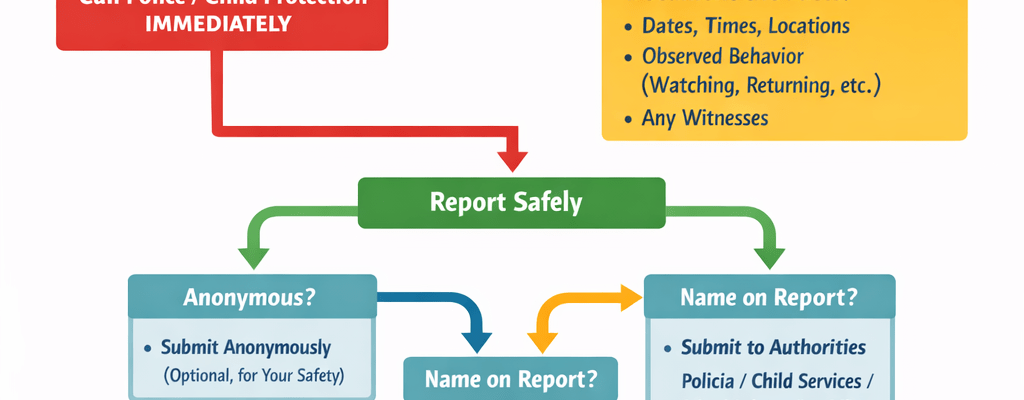
Step 1: Receive the report
- Accept the letter or notice from a third party calmly.
- Do not confront the person or any other witnesses.
- Keep the original letter secure.
Step 2: Assess immediate danger
- Are children currently at risk?
- Yes: Contact police or child protection immediately.
- No: Proceed to documentation.
Step 3: Document facts
- Record exactly what was reported:
- Who reported it
- Dates, times, locations
- Specific behaviours observed
- Any witnesses or supporting evidence
- Use a neutral format
- Avoid opinions, assumptions, or interpreting intent
Step 4: Decide on anonymity
- You can often submit reports anonymously if you feel unsafe.
- Anonymous reporting protects your identity from the person being reported.
Step 5: Submit to authorities
- Forward your report (and the formal letter, if allowed) to:
- Police / Guardia Civil suspicious behaviour
- Child protection / Servicios Sociales for safeguarding
- School safeguarding officer if relevant to the location
- Authorities will assess the risk and determine next steps
Step 6: Maintain confidentiality
- Do not share the report or letter with mutual friends, family, or on social media
- Keep copies secure in case follow-up is required
Step 7: Follow-up
- Authorities may contact you or the complainant for clarification
- Continue to record facts only, and pass updates to authorities as requested
Step 8: Personal safety measures
- Avoid being alone in places where your ex may be present
- Restrict personal information online
- Log any contact or threatening behaviour from your ex
Key principle:
Your role is receiver, recorder, and reporter, not investigator. Reporting safely through authorities protects both children and yourself.
 Linda C J Turner | Trauma Therapist & Emotional Healing Specialist