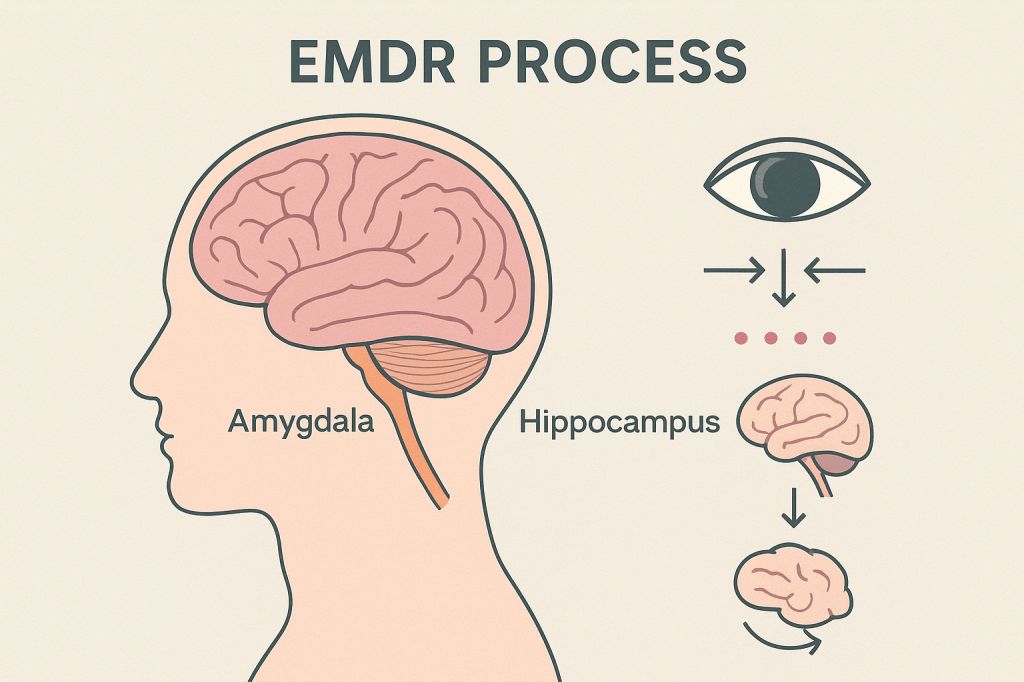
I’ve been doing EMDR (Eye Movement Desensitization and Reprocessing) once a month for nearly a year now. Each session starts with revisiting one of the most painful memories from my past and working to process and calm the nervous system around it. The goal isn’t to erase my memories entirely — it’s to reduce their emotional charge, so they no longer hijack my body or mind.
Over time, I’ve noticed the intensity of the worst memories slowly subsiding. The hypervigilance, the sudden waves of fear, the involuntary flashbacks — they’re becoming more manageable. Neuroscience shows that EMDR can help reconnect and rewire traumatic neural pathways, allowing the brain to integrate the memory without triggering the same level of emotional alarm. The amygdala (the brain’s alarm system) becomes less reactive, and the prefrontal cortex (reason and regulation) regains its balance.
I often reflect on how deeply affected the ex-partner and children of an abuser must be. Decades of abuse leave lasting imprints on the nervous system, memory, and sense of safety. The ripple effects of trauma can persist across relationships, shaping emotions, decisions, and trust long after the events themselves.
Healing is gradual. EMDR is helping me reclaim my body, mind, and sense of safety, one memory at a time. It’s a reminder that trauma can be addressed, nervous systems can calm, and lives can rebuild, even after prolonged abuse.

 © Linda C J Turner | All Rights Reserved | Reposts must reference
www.LindaCJTurner.com
© Linda C J Turner | All Rights Reserved | Reposts must reference
www.LindaCJTurner.com
 Linda C J Turner | Trauma Therapist & Emotional Healing Specialist