Cruelty is not a single act of meanness.
It is a sustained system of harm designed to erode a person’s safety, identity, autonomy, and reality—often carried out by one abuser and reinforced by others.
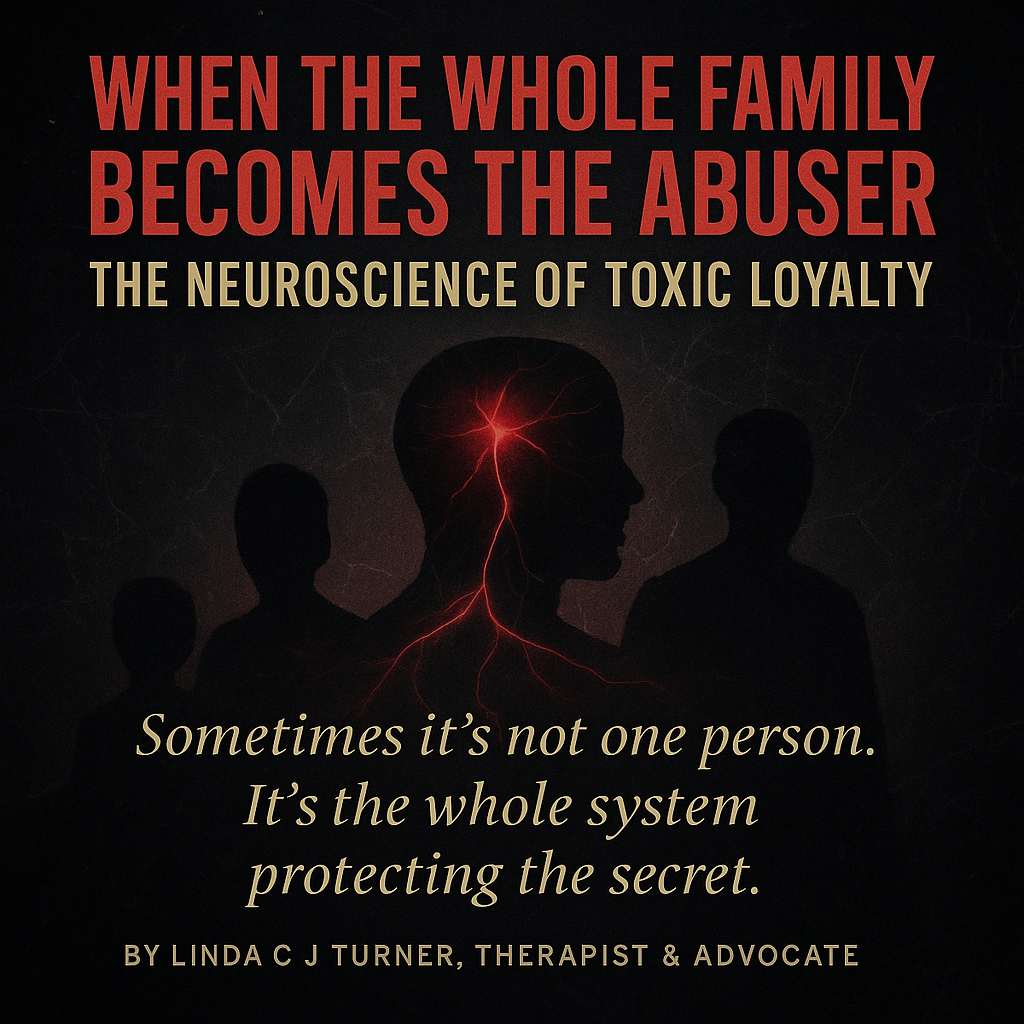
When family members participate, cruelty becomes institutional and relational, not just interpersonal.
What Makes This Form of Cruelty Distinct
1. Cruelty as a Pattern, Not an Incident
In long-term abuse:
Harm is predictable, repetitive, and strategic The goal is not conflict resolution, but domination and exhaustion Kindness is conditional and used as leverage
This is why survivors often say:
“It wasn’t what happened once — it was what never stopped.”
2. Cruelty Through Collusion
When family members join in, cruelty is amplified through:
Silence (refusing to intervene) Minimisation (“that’s just how he is”) Triangulation (passing messages, gossip, pressure) Character assassination behind closed doors Collective gaslighting (rewriting events so the victim appears unstable)
This is cruelty by consensus.
3. Cruelty as Reality Destruction
One of the most damaging forms is:
Denying what the victim clearly experiences Reframing abuse as “oversensitivity” Punishing truth-telling Rewarding compliance
Neurologically, this creates:
Chronic hypervigilance Stress-hormone dysregulation Cognitive exhaustion Loss of self-trust
Cruelty here is making someone doubt their own mind.
4. Cruelty Through Withholding
Not all cruelty is loud.
In families that join in abuse, cruelty often looks like:
Emotional abandonment at critical moments Withholding support, money, information, affection Excluding the victim from decisions that affect them Turning celebrations, illness, or grief into leverage
This is cruelty through deliberate absence.
5. Cruelty as Moral Inversion
A defining feature is when:
The abused person is labelled “difficult” Boundaries are framed as hostility Self-protection is punished The abuser is protected “for the sake of peace”
This inversion is psychologically violent.
A Plain-Language Definition
Cruelty in long-term, family-supported abuse is the sustained removal of safety, dignity, and truth—enforced by repetition, silence, and group loyalty.
Why This Hurts More Than Single-Perpetrator Abuse
Because the nervous system is wired for attachment and belonging:
Betrayal by one person is trauma Betrayal by a family system is identity-level trauma
It tells the survivor:
“There is nowhere you are safe, and no one who will confirm what you see.”
What This Redefinition Validates
Why leaving takes so long Why survivors feel “crazy” or ashamed Why boundaries trigger backlash Why no contact or limited contact is damage control, not cruelty Why healing often begins only after separation from the system, not just the partner
Closing Truth
Cruelty is not anger, conflict, or imperfection.
Cruelty is the repeated choice to harm — and the collective choice to allow it.
 Linda C J Turner | Trauma Therapist & Emotional Healing Specialist