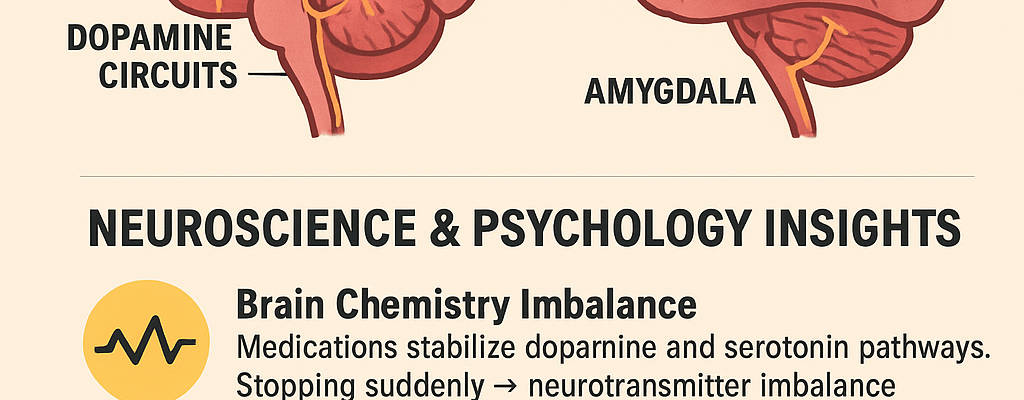
Neuroscience & Psychology Insights
- Brain Chemistry Imbalance
- Medications for psychosis (antipsychotics) stabilize dopamine and serotonin pathways.
- Stopping suddenly → neurotransmitter imbalance → spikes in paranoia, irritability, or aggression.
- Impulse Control Drops
- Prefrontal cortex regulates judgment and self-control.
- Medication withdrawal can reduce prefrontal cortex function → harder to resist violent or risky impulses.
- Emotional Dysregulation
- Amygdala becomes hyperactive → heightened fear, rage, or emotional overreactions.
- May trigger intense anger or aggression “out of proportion.”
- Cognitive Distortions
- Psychotic symptoms (hallucinations, delusions) can resurface → misinterpret intentions, amplify suspicion, or fuel obsession.
- Behavioral Warning Signs
- Increased irritability, hostility, or verbal threats
- Sleep disruption, mood swings
- Obsessive thinking or fixations
- Sudden withdrawal or secrecy
- Psychological Implications
- Victims may notice a shift from controlled manipulation to erratic aggression.
- Long-term fear, hypervigilance, and trauma can develop in observers or partners.
— Linda C J Turner
Trauma Therapist | Neuroscience & Emotional Intelligence Practitioner | Advocate for Women’s Empowerment
©Linda C J Turner
© 2025 Linda Carol Turner. Content protected by copyright.
Reproduction or redistribution in any form requires prior written permission from the author.
When quoting or referencing, please cite: Linda Carol, Psychology & Neuroscience Insights.
 Linda C J Turner | Trauma Therapist & Emotional Healing Specialist