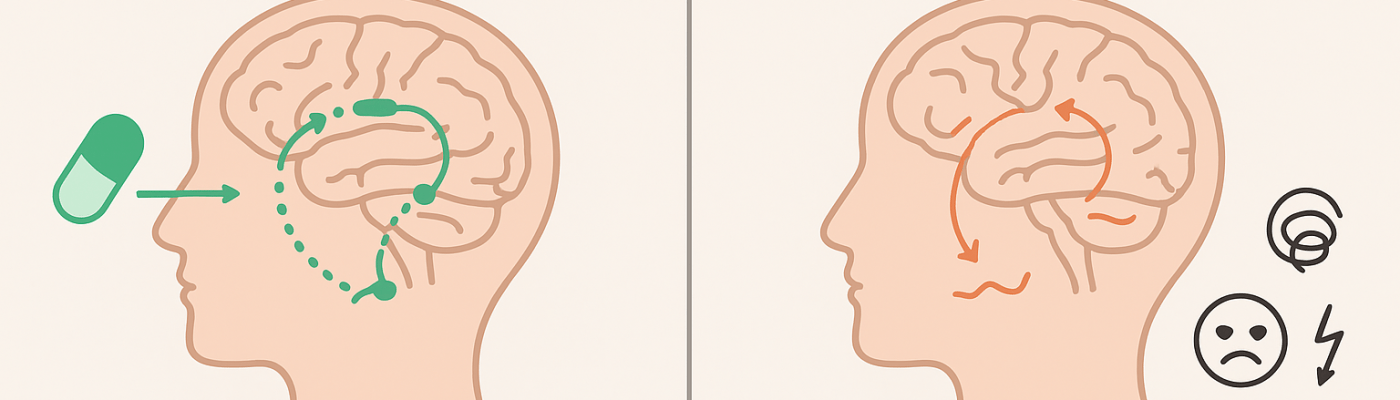
When an abuser has a history of violence and is off their prescribed medication (especially for psychiatric or mood disorders), it significantly increases the risk of aggression and impulsive behavior. Here’s why and what to do:
Why It’s Dangerous
- Medication Stabilizes Behavior
- Many psychiatric medications (for mood disorders, psychosis, or personality disorders) help control impulses, anger, and violent tendencies.
- Stopping medication can cause rapid mood swings, agitation, or psychotic episodes, increasing the risk of harm.
- History of Abuse Matters
- If the person has already shown violent behavior, being off medication can remove a key buffer that keeps them from acting on violent impulses.
- Unpredictable Triggers
- Stress, conflict, or perceived slights can escalate quickly into violence.
- They may act on fantasies or previous abusive patterns.
Immediate Actions
- Ensure safety first: Avoid being alone with them.
- Remove vulnerable people: Children, elderly, or anyone who could be harmed.
- Contact authorities if threatened:
- UK: 999 (emergency) or 101 (non-emergency)
- Europe: 112 (emergency)
Precautionary Steps
- Document behavior changes: What you see and hear, including dates and details.
- Alert local support systems: Friends, family, or neighbors if safe.
- Consider professional help: Mental health crisis teams can sometimes intervene safely.
- Plan an escape route: Know where to go if the situation escalates.
⚠️ Red flags that require immediate action:
- Talking about harming themselves or others
- Aggressive outbursts or destruction of property
- Possession of weapons
- Severe paranoia or delusions
— Linda C J Turner
Trauma Therapist | Neuroscience & Emotional Intelligence Practitioner | Advocate for Women’s Empowerment
©Linda C J Turner
© 2025 Linda Carol Turner. Content protected by copyright.
Reproduction or redistribution in any form requires prior written permission from the author.
When quoting or referencing, please cite: Linda Carol, Psychology & Neuroscience Insights.
 Linda C J Turner | Trauma Therapist & Emotional Healing Specialist