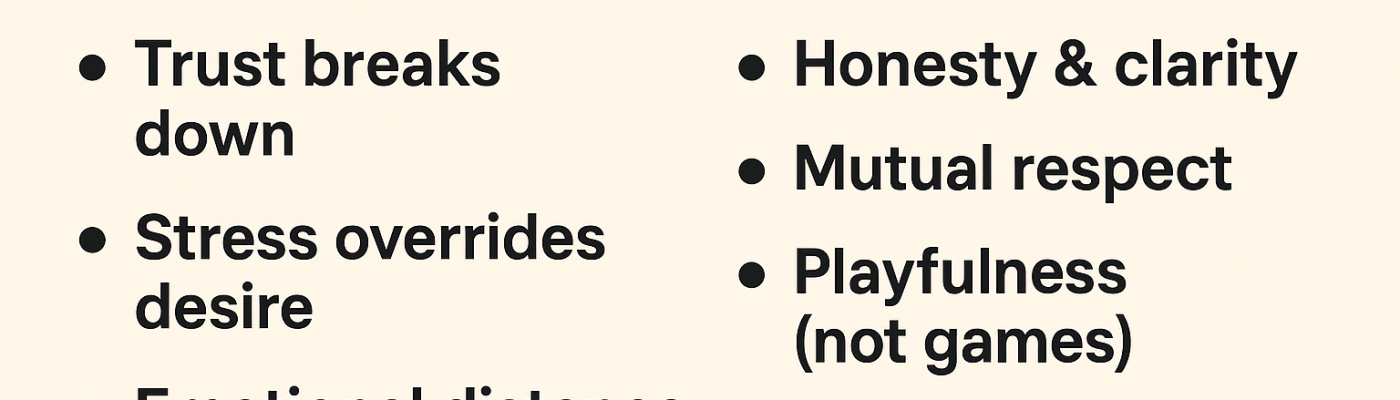
1. Trust Breaks Down
- Sex thrives on safety and openness.
- When one partner plays hard to get, manipulates, or withholds affection, it erodes trust.
2. Stress Overrides Desire
- Cortisol (stress hormone) rises when you’re anxious, confused, or insecure.
- High cortisol suppresses dopamine (pleasure/reward) and oxytocin (bonding), both essential for sexual arousal.
3. Emotional Distance
- Head games create power struggles instead of connection.
- Emotional closeness is what fuels desire — without it, sex feels empty, forced, or absent.
4. Performance Pressure
- If one person feels they constantly have to “earn” intimacy, arousal shifts into performance anxiety, which blocks sexual chemistry.
✅ What Fuels Desire Instead
- Honesty & Clarity → Knowing where you stand keeps stress low.
- Mutual Respect → Both partners feel safe, wanted, and equal.
- Playfulness (Not Games) → Flirty teasing is fun; manipulation is toxic.
- Emotional Availability → When both feel seen and valued, oxytocin rises, creating deeper sexual connection.
✨ Key Insight:
Sex isn’t just physical — it’s deeply tied to psychology and neuroscience. Head games signal insecurity and control, while authentic desire flows from trust, safety, and openness.
 Linda C J Turner | Trauma Therapist & Emotional Healing Specialist