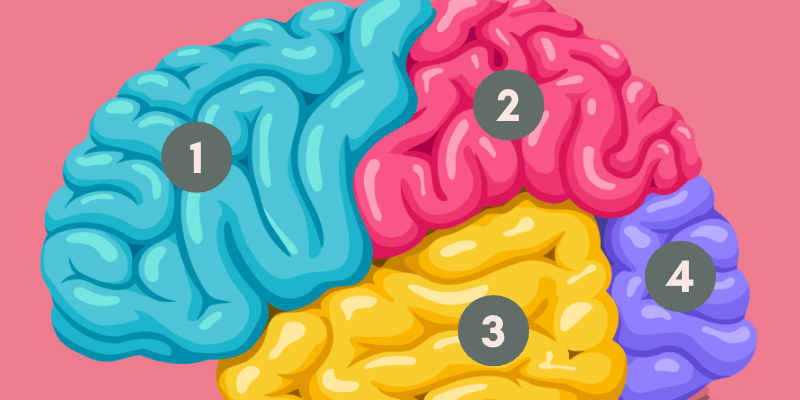
Emotional regulation, from a neuroscience perspective, refers to the processes through which individuals influence their emotions, how they experience them, and how they express them. These processes are underpinned by complex interactions between various brain regions, neurotransmitter systems, and neural circuits.
Here’s a deeper look into the neuroscience behind emotional regulation:
1. Key Brain Regions Involved:
- Prefrontal Cortex (PFC):
- The PFC, particularly the ventromedial prefrontal cortex (vmPFC) and the dorsolateral prefrontal cortex (dlPFC), plays a central role in emotional regulation. It’s involved in higher-order cognitive functions like decision-making, planning, and impulse control. The PFC helps modulate emotional responses by exerting top-down control over other brain regions, particularly the amygdala.
- Amygdala:
- The amygdala is crucial for detecting and processing emotions, especially those related to threat and fear. It is part of the brain’s limbic system and is responsible for the initial, automatic emotional reactions to stimuli. Emotional regulation involves modulating the amygdala’s response to prevent excessive or inappropriate emotional reactions.
- Anterior Cingulate Cortex (ACC):
- The ACC is involved in emotional regulation by helping to monitor conflicts between emotional impulses and rational decision-making. It helps mediate the connection between the emotional responses generated by the amygdala and the regulatory control exerted by the PFC.
- Hippocampus:
- The hippocampus is involved in memory formation and retrieval. It helps provide contextual information to emotional responses, allowing for more nuanced and appropriate emotional regulation.
2. Neurotransmitter Systems:
- Serotonin:
- Serotonin is often associated with mood regulation. It plays a role in emotional stability and impulse control. Dysregulation in the serotonin system has been linked to mood disorders such as depression and anxiety, which can impair emotional regulation.
- Dopamine:
- Dopamine is associated with reward and motivation. It’s involved in the anticipation of pleasure and in learning from rewards and punishments. Abnormalities in dopamine function can affect emotional regulation, leading to impulsivity or difficulties in managing emotions.
- GABA (Gamma-Aminobutyric Acid):
- GABA is the brain’s primary inhibitory neurotransmitter. It helps to reduce neuronal excitability and plays a crucial role in calming the nervous system, thus facilitating emotional regulation by dampening overactive emotional responses.
3. Neural Circuits and Pathways:
- The Amygdala-PFC Pathway:
- Emotional regulation involves the interaction between the PFC and the amygdala. The PFC exerts top-down control over the amygdala, helping to regulate emotional responses. This pathway is crucial for reappraisal, a cognitive strategy where one changes the interpretation of a situation to alter its emotional impact.
- The Hypothalamic-Pituitary-Adrenal (HPA) Axis:
- The HPA axis is involved in the body’s response to stress. Dysregulation of this axis can lead to heightened stress responses and difficulties in emotional regulation, contributing to anxiety and mood disorders.
4. Mechanisms of Emotional Regulation:
- Reappraisal:
- Reappraisal involves changing the way one thinks about a situation to alter its emotional impact. Neuroimaging studies show that reappraisal activates the PFC, which in turn modulates activity in the amygdala, reducing the intensity of negative emotions.
- Suppression:
- Suppression involves inhibiting the outward expression of emotions. This strategy engages the PFC but has been shown to increase physiological responses and amygdala activity, which can make it less effective and even counterproductive over time.
- Mindfulness and Cognitive Control:
- Mindfulness practices, which emphasize non-judgmental awareness of the present moment, can enhance emotional regulation. These practices increase the connectivity between the PFC and the amygdala, enhancing the brain’s ability to regulate emotional responses.
5. Development and Plasticity:
Emotional regulation capabilities develop over time, with significant changes occurring during childhood and adolescence. The maturation of the PFC and its connections with the amygdala is crucial for the development of effective emotional regulation strategies.
Neuroplasticity, the brain’s ability to reorganize itself, plays a role in emotional regulation. Through practices like mindfulness, cognitive-behavioral therapy (CBT), and other interventions, individuals can strengthen the neural circuits involved in emotional regulation, leading to more adaptive emotional responses.
Conclusion:
From a neuroscience perspective, emotional regulation is a complex, dynamic process involving the interaction of multiple brain regions, neurotransmitters, and neural circuits. It’s a critical function that allows individuals to navigate the emotional challenges of life, influencing mental health, well-being, and interpersonal relationships. Understanding the neuroscience behind it can inform therapeutic approaches to enhance emotional regulation, particularly in individuals with mood and anxiety disorders.
Copyright © Linda C J Turner 2023 LindaCJTurner.com All Rights Reserved.
All content on this website, including text, images, graphics, and other material, is protected by copyright law and is the property of Linda C J Turner unless otherwise stated. Unauthorized use or reproduction of the content in any form is prohibited.
 Linda C J Turner | Trauma Therapist & Emotional Healing Specialist