
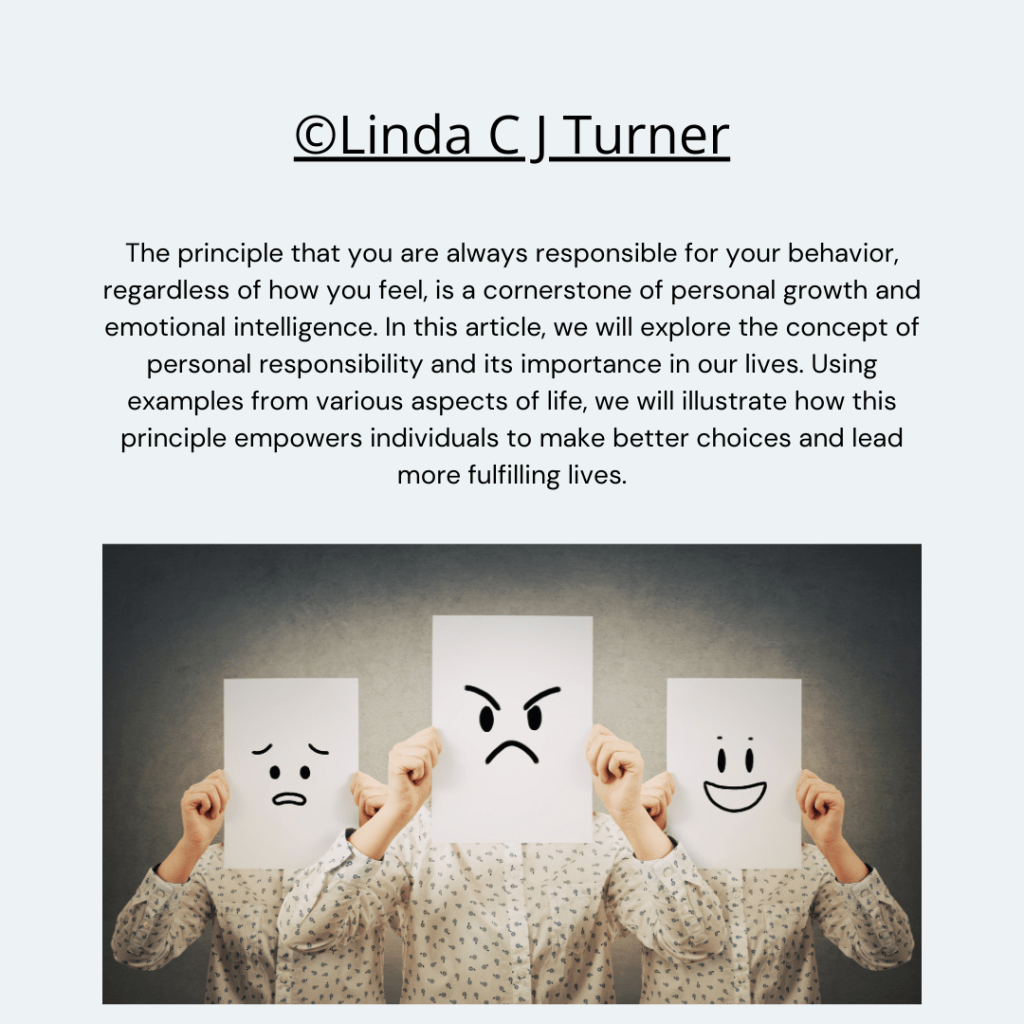
The principle that you are always responsible for your behavior, regardless of how you feel, is a cornerstone of personal growth and emotional intelligence. In this article, we will explore the concept of personal responsibility and its importance in our lives. Using examples from various aspects of life, we will illustrate how this principle empowers individuals to make better choices and lead more fulfilling lives.
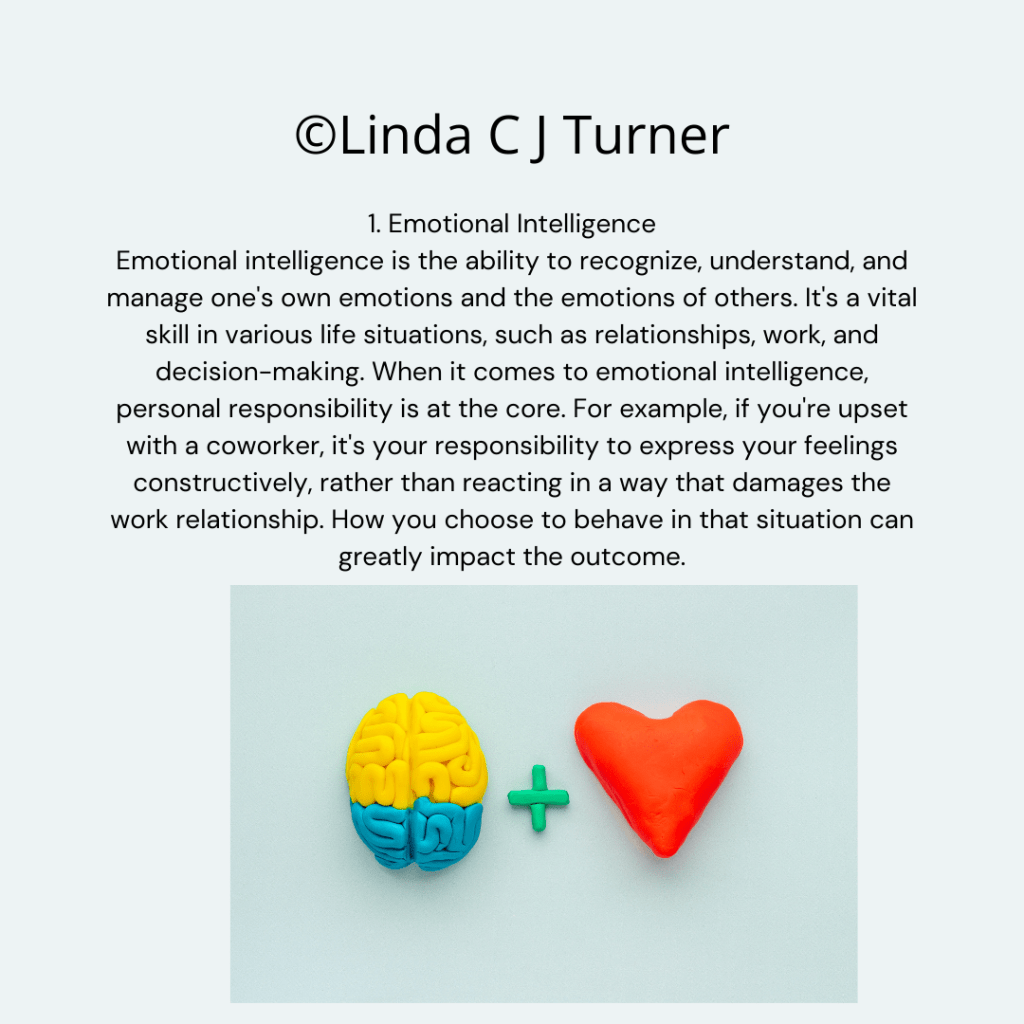
1. Emotional Intelligence
Emotional intelligence is the ability to recognize, understand, and manage one’s own emotions and the emotions of others. It’s a vital skill in various life situations, such as relationships, work, and decision-making. When it comes to emotional intelligence, personal responsibility is at the core. For example, if you’re upset with a coworker, it’s your responsibility to express your feelings constructively, rather than reacting in a way that damages the work relationship. How you choose to behave in that situation can greatly impact the outcome.
2. Relationships
In personal relationships, the principle of personal responsibility is paramount. How you respond to your partner’s actions or words can either strengthen the bond or create distance. For instance, if you’re in an argument with your significant other, you are responsible for your words and actions. You can choose to communicate respectfully and resolve the issue, or you can escalate the conflict with hurtful behavior. Your choice affects the health and longevity of the relationship.
3. Stress Management
In moments of stress or pressure, personal responsibility becomes a powerful tool for maintaining composure. Consider a high-pressure work environment where deadlines are tight, and stress is abundant. You can choose to manage your stress in a healthy way by taking breaks, seeking support, and prioritizing self-care. Alternatively, you might lash out at colleagues or engage in self-destructive behaviors. Your behavior, in this case, is a reflection of your choice to take responsibility for your emotional state.
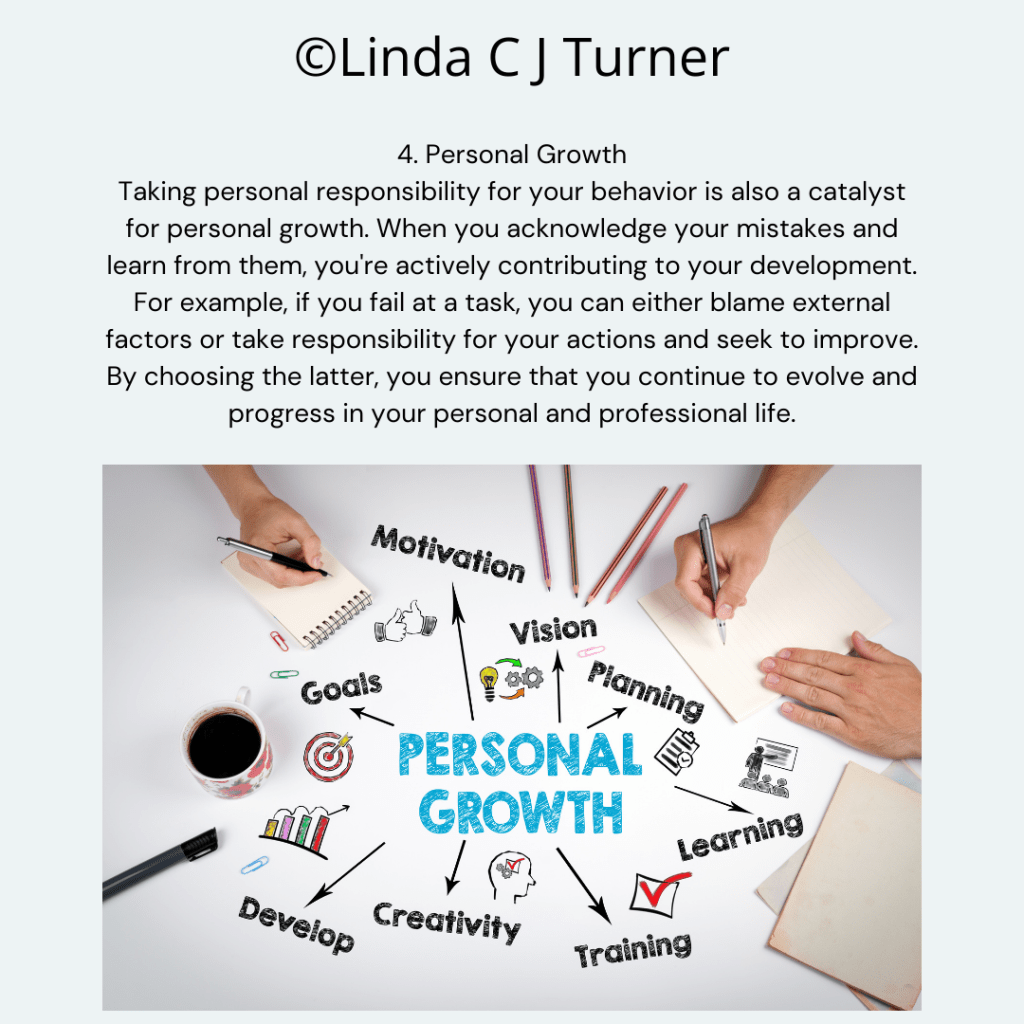
4. Personal Growth
Taking personal responsibility for your behavior is also a catalyst for personal growth. When you acknowledge your mistakes and learn from them, you’re actively contributing to your development. For example, if you fail at a task, you can either blame external factors or take responsibility for your actions and seek to improve. By choosing the latter, you ensure that you continue to evolve and progress in your personal and professional life.
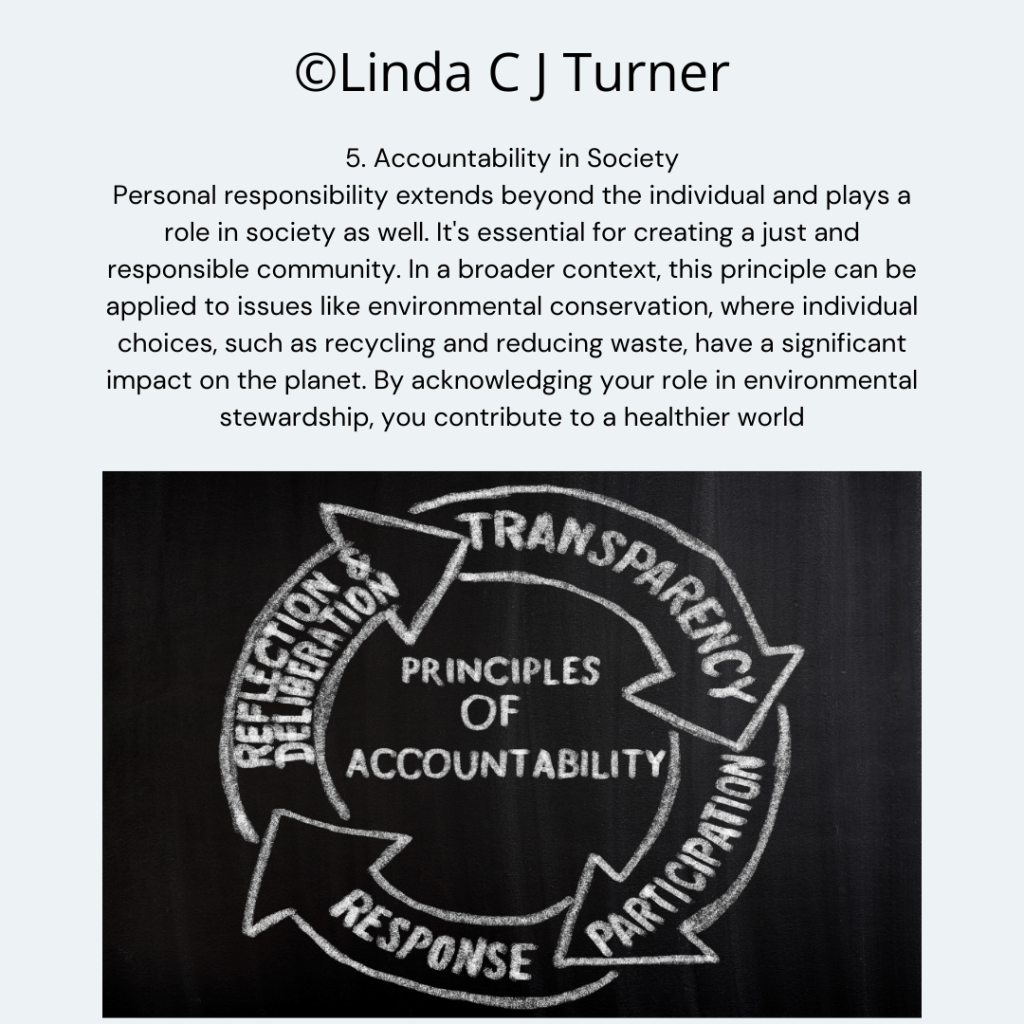
5. Accountability in Society
Personal responsibility extends beyond the individual and plays a role in society as well. It’s essential for creating a just and responsible community. In a broader context, this principle can be applied to issues like environmental conservation, where individual choices, such as recycling and reducing waste, have a significant impact on the planet. By acknowledging your role in environmental stewardship, you contribute to a healthier world.
Conclusion:
The notion that you are always responsible for your behavior, regardless of how you feel, underscores the idea that your choices shape your life. Whether it’s in the realm of emotional intelligence, relationships, stress management, personal growth, or societal accountability, personal responsibility empowers individuals to make choices that lead to positive outcomes. It’s not about denying your emotions but about recognizing that you have control over how you express and manage them. By living in alignment with this principle, you can build healthier relationships, lead a more fulfilling life, and contribute to a better world.
Copyright © Linda C J Turner 2023

 Linda C J Turner | Trauma Therapist & Emotional Healing Specialist