Why Some Abusers Escalate Once More Before Stopping

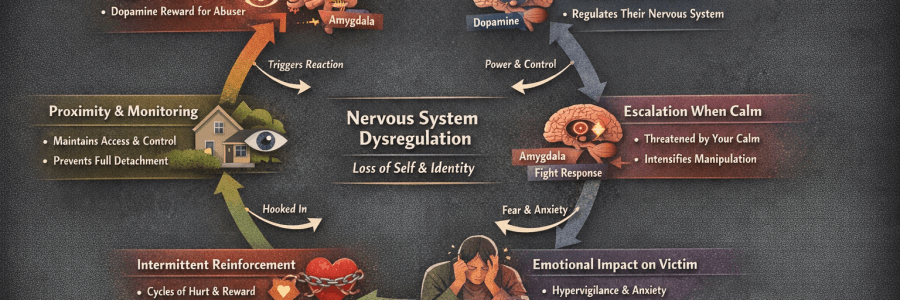
This is called an extinction burst in neuroscience and behavioural psychology. It happens when a behaviour that used to work suddenly stops working. 1️⃣ The Brain Detects Reward Loss When a survivor enforces boundaries or goes silent, the abuser’s brain experiences: 🧠 The brain registers: “My usual strategy has failed.” But it does not interpret this as “stop.” 2️⃣ The… Read More Why Some Abusers Escalate Once More Before Stopping

Silence Removes the Regulation Source

Abusive dynamics work because the abuser uses another person to: When you go silent: 🧠 ResultThe nervous system loses its external regulator. ➡️ Dysregulation begins internally. 2️⃣ The Brain Encounters Reward Collapse Cruelty and control rely on dopamine prediction: “If I do X, I will get Y (reaction, fear, reassurance, submission).” Silence creates: 🧠 Dopamine drops sharply.This feels… Read More Silence Removes the Regulation Source

How One Enforced Boundary Disrupts the Entire Cruelty Loop

Cruelty depends on access.A single boundary works because it removes fuel, not because it teaches insight. 1️⃣ Boundary Enforcement = Circuit Interruption When a survivor enforces a boundary (not explains it, not negotiates it): 🧠 Neurological effect ➡️ The system experiences error, not satisfaction. 2️⃣ Why Silence Collapses the Reward Circuit Cruelty requires: Silence removes all three. What silence does neurologically… Read More How One Enforced Boundary Disrupts the Entire Cruelty Loop

Free from Threat

Safety is both internal and external, and it can look very different depending on context. Here’s a structured set of examples for survivors of abuse, framed in psychological and nervous-system terms: 1. Physical Safety External environment is secure, predictable, and free from threat. Examples: Nervous-system impact: 2. Emotional Safety You can experience feelings without judgment or manipulation.… Read More Free from Threat

When Freedom Arrives: What Comes Next — and Why It Hurts Before It Heals

Leaving long-term coercive control does not immediately feel like relief.For many people, the most intense psychological experiences come after distance, not during the abuse. This is not a setback.It is the nervous system finally having the safety required to process reality. 1. Why Self-Blame Appears During Clarity When clarity begins to emerge, self-blame often rushes in behind it.… Read More When Freedom Arrives: What Comes Next — and Why It Hurts Before It Heals

WHY YOUR STRENGTH WAS USED AGAINST YOU

(and why that does NOT mean it wasn’t strength) PART 1: HOW STRENGTH BECAME A CONTROL LEVER 1. Responsibility → Exploitation Your strength:• You take responsibility• You don’t abandon people lightly• You problem-solve instead of panicking How it was used:• Responsibility was transferred onto you• His instability became your job to manage• Collapse was framed as something you… Read More WHY YOUR STRENGTH WAS USED AGAINST YOU

🛑🧠 Boundary Breaches & How to Respond Without Re-Traumatizing

Core Rule A healthy response: 📊 Boundary Breach → Regulating Response Map Type of Boundary Breach What It Looks Like Why It’s Triggering Non-Re-Traumatizing Response Neuroscience Effect Direct Contact After No-Contact Emails, texts, “just checking in” Violates safety expectation Do not reply. Document. Block or route to lawyer. Amygdala learns silence = safety Provocation / Baiting… Read More 🛑🧠 Boundary Breaches & How to Respond Without Re-Traumatizing

🧠⚠️ How Intimidation Escalates When It Stops Working

Core Principle Intimidation is a threat-based regulation strategy.When it fails, the threat-brain does not self-correct — it escalates. 🔁 Escalation Stages (Threat Brain Under Pressure) Stage What Stops Working Escalated Behavior Neuroscience Driver 1. Dismissal You don’t react emotionally Mockery, belittling, emojis, sarcasm Mild amygdala activation 2. Pressure You don’t comply Repeated messages, urgency, “last chance” Rising cortisol 3. Reputation… Read More 🧠⚠️ How Intimidation Escalates When It Stops Working

🧠 How Long-Term Exposure to Threat & Harassment Damages Trust and Self-Regulation

Stage-by-Stage Neuropsychological Impact Area Affected What Repeated Threat Exposure Does Long-Term Consequence Amygdala (Threat Detector) Becomes hypersensitive Constant alertness, anxiety, startle response Prefrontal Cortex (Self-regulation) Overridden repeatedly Difficulty concentrating, decision fatigue Hippocampus (Memory & Context) Stores events as danger memories Triggers activated by reminders, emails, names Vagus Nerve (Calming Pathway) Under-stimulated Trouble calming after stress… Read More 🧠 How Long-Term Exposure to Threat & Harassment Damages Trust and Self-Regulation

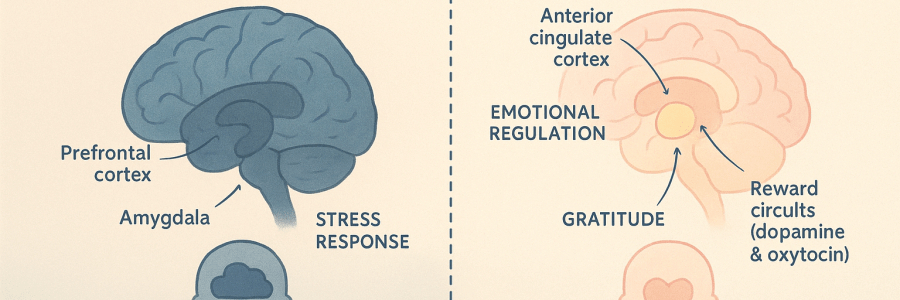
Stress and Threat Response

1. Legal Actions You Can Take When an ex’s family member sends derogatory, threatening, or manipulative messages aimed at influencing a financial settlement or your reputation, the law provides several protections: a. Document Everything b. Civil Legal Options c. Criminal Considerations d. In Court 2. Psychological and Neuroscience Impact Being targeted like this by a family member,… Read More Stress and Threat Response