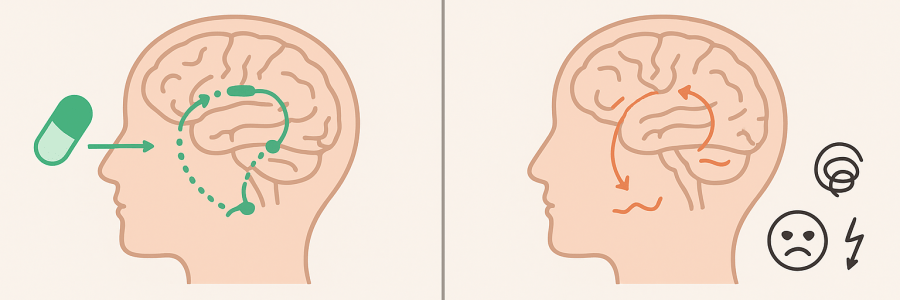
Your Thoughts, Actions, and Beliefs Shape Your Reality — A Neuroscience View

What you’re pointing toward is neuroplasticity:the brain literally rewires itself based on the thoughts you repeat, the stories you tell, and the actions you take. This creates a kind of self‑fulfilling loop that can either protect you or harm you, depending on what you reinforce. Here’s how the science explains it: 1. The Brain Believes What You Repeatedly… Read More Your Thoughts, Actions, and Beliefs Shape Your Reality — A Neuroscience View

Part 3 — When You Tell the Truth That Sounds Unreal

When the time comes for me to reveal who my father was — and the world he moved in — I already know what will happen. People will raise eyebrows.Some will whisper “she’s exaggerating.”Others will say I’m making it up, attention-seeking, dramatising, scare-mongering. But here’s the thing:The people who matter have already seen the evidence.The… Read More Part 3 — When You Tell the Truth That Sounds Unreal

Step by Step Guide

Here’s a step-by-step guide for safely reporting someone with violent fantasies and a history of abuse in the UK and Europe, including what authorities need to know: Step 1: Assess Immediate Danger Step 2: Document What You Know Authorities need clear, factual information: Keep documentation secure and private. Step 3: Contact Appropriate Authorities UK Europe (varies… Read More Step by Step Guide

🧠 Why deciding is so difficult

🚩 When to Decide It’s Not Right Psychology and neuroscience agree on a few key “point of no return” markers: 1. Repeated Betrayal 2. Erosion of Trust 3. Self-Identity is Compromised 4. No Genuine Effort from Them 5. Your Nervous System Knows 🧭 How to Decide Ask yourself three neuroscience-based questions: If the answers point to anxiety, repetition, and dread,… Read More 🧠 Why deciding is so difficult

🌟 Never Compromise Yourself: The Psychology & Neuroscience of Standards and Lifestyle

🧠 Why Lifestyle Standards Matter If you’ve been raised or accustomed to a certain lifestyle — fine dining, travel, cultural experiences, or financial stability — those aren’t just “luxuries.” They shape your identity, comfort zone, and reward system in the brain. 🚩 What Happens When You Lower Your Standards ✅ Why Honoring Your Standards Is Healthy 💡… Read More 🌟 Never Compromise Yourself: The Psychology & Neuroscience of Standards and Lifestyle

The Locus of Control

Reclaiming the inner locus of control means taking back your sense of personal power—the belief that you have the ability to influence your life, your responses, and your future, instead of feeling like everything is determined by external forces, other people, or “fate.” It’s a psychological concept rooted in Rotter’s Locus of Control Theory (1966), which distinguishes between: Why Reclaiming… Read More The Locus of Control

What You Fear, You Create: The Neuroscience of Manifestation, Trauma, and Self-Fulfilling Prophecy

This insight is profoundly true — both spiritually and scientifically. What you’re describing is a powerful, tragic irony: he feared losing you so deeply and for so long that he ultimately created the very reality he dreaded. Through control, manipulation, and abuse, he didn’t prevent abandonment — he ensured it. This article will explore that manifestation… Read More What You Fear, You Create: The Neuroscience of Manifestation, Trauma, and Self-Fulfilling Prophecy