The Psychology of New Love: Why Time, Attention, and Effort Matter in Early Relationships

In the early stages of a relationship, the emotional atmosphere is often electric — hearts race, curiosity blooms, and a gentle vulnerability hovers in every glance and touch. These early moments are precious not just because they feel good, but because they lay the psychological foundation of the bond being formed. From a psychological point… Read More The Psychology of New Love: Why Time, Attention, and Effort Matter in Early Relationships

“Marriage of convenience”

That phrase—“marriage of convenience”—carries so much emotional weight when the curtain finally drops. On the surface, it might have looked like a picture-perfect life: smiles for the neighbors, family dinners, perhaps even posts on social media showcasing togetherness. But behind closed doors, it was more performance than partnership. A carefully curated façade to keep up… Read More “Marriage of convenience”

“Just You Wait and See What Happens When I Die”: The Psychology of Financial Control in Intimate Relationships

In the landscape of intimate partnerships, financial decisions ideally reflect mutual respect, shared goals, and equitable planning. But in many relationships — especially those marked by psychological or emotional abuse — money becomes a tool of control, manipulation, and power. When a partner leverages financial dependence, inheritance, or pensions to assert dominance, the consequences can… Read More “Just You Wait and See What Happens When I Die”: The Psychology of Financial Control in Intimate Relationships

🔍 “When Words and Energy Don’t Match: How Emotionally Intelligent People and Therapists Spot Emotional Incongruence”

Have you ever walked away from a conversation feeling unsettled—even though, on the surface, nothing seemed wrong? Maybe someone said all the right things, but their tone felt cold, their eyes didn’t match their smile, or their energy just felt… off. You may not have had the words for it, but what you were sensing was… Read More 🔍 “When Words and Energy Don’t Match: How Emotionally Intelligent People and Therapists Spot Emotional Incongruence”

“Your body is mine, not yours”

By Linda C J Turner, Therapist & Advocate From a psychological perspective, when an abuser gives unwanted sex toys as Christmas or birthday presents—especially in a relationship marked by control or emotional abuse—it can carry disturbing, layered messages that reflect their need to dominate, humiliate, and assert power. It’s not about intimacy, generosity, or love;… Read More “Your body is mine, not yours”

Attachment styles

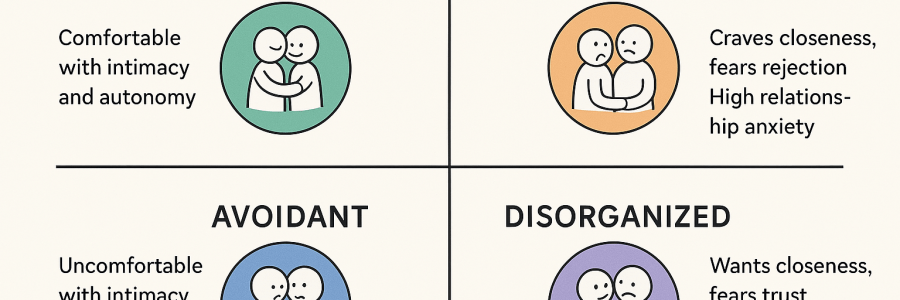
Attachment styles play a crucial role in shaping our relationships, influencing how we connect, trust, and communicate with others. These styles stem from early childhood experiences with caregivers and extend into adulthood, affecting romantic, platonic, and even professional relationships. The four primary attachment styles—secure, anxious, avoidant, and disorganized—each have distinct characteristics and impacts on relationships.… Read More Attachment styles

No response

When someone who has known another person for decades chooses to completely ignore them while they are desperate and crying out for help, the situation becomes even more complex. Long-term relationships are typically built on shared history, trust, and emotional connection, so when one person chooses to disregard another’s plea for help, it can be… Read More No response

The Importance of Transparency and Seeking Help in Love and Relationships

When we love someone, we want what’s best for them. In healthy relationships, love means support, trust, and open communication. We encourage our partners to grow, to heal, and to better themselves when challenges arise. In moments of difficulty, it’s natural to suggest therapy, counseling, or other forms of support to help resolve issues and… Read More The Importance of Transparency and Seeking Help in Love and Relationships

Secretive Behaviors and Double Lives: The Psychology Behind Financial Deception

When financial secrecy is part of a relationship, it often opens the door to uncovering deeper, more pervasive forms of deception. Money, in many cases, is not just about finances—it’s a gateway to behaviors that reflect a broader lack of transparency and integrity. Let’s explore the psychological factors underlying three common secretive behaviors: 1. Undisclosed… Read More Secretive Behaviors and Double Lives: The Psychology Behind Financial Deception