Emotional Deadness vs Covert Emotional Neglect

(Internal state → Relational experience) 1. Core state Emotional deadnessA chronically under-activated emotional system. Feelings are dulled, muted, or inaccessible. Covert emotional neglectYour emotional needs are consistently unmet — not through cruelty, but through absence. 2. What it looks like day to day Emotional deadness Covert emotional neglect 3. Nervous system pattern Emotional deadness Covert emotional… Read More Emotional Deadness vs Covert Emotional Neglect
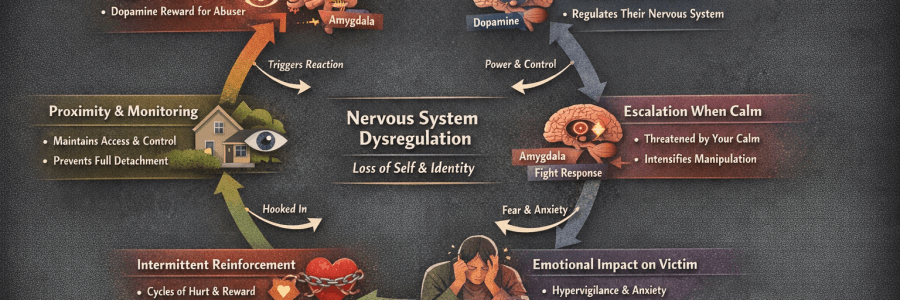
Safe Disengagement When ASPD-Type Dynamics Are Present

When antisocial traits are involved, disengagement is not relational — it is operational.You are not leaving a mutual bond; you are exiting a system where you were an asset. 🧭 Core Shift (This Is Non-Negotiable) You are not dealing with misunderstanding — you are dealing with entitlement. There is no insight coming.There is no repair coming.There is no shared… Read More Safe Disengagement When ASPD-Type Dynamics Are Present

What is ASPD (Antisocial Personality Disorder)?

Antisocial Personality Disorder (ASPD) is a clinical diagnosis used to describe a persistent pattern of disregard for the rights, safety, and boundaries of others. It’s not about being “difficult” or having a bad temper. It’s about how someone relates to people, rules, and responsibility over time. Common features include: Importantly:Not everyone with antisocial traits has ASPD, and not… Read More What is ASPD (Antisocial Personality Disorder)?

How Other People’s Agendas Can Distort Separation and Divorce Decisions

During separation and divorce, one of the most important — and most difficult — boundaries to hold is this: Do not allow siblings, children, extended family, or friends to sway your decisions simply because they are close to you. Not everyone involved has your best interests at heart — even when they believe they do.… Read More How Other People’s Agendas Can Distort Separation and Divorce Decisions

Mental cruelty from the family of an abuser — what it is

Mental cruelty by an abuser’s family occurs when relatives knowingly or recklessly engage in behaviours that reinforce, enable, excuse, or extend the abuser’s control, causing psychological harm and undermining the victim’s autonomy, safety, or credibility. This is sometimes called: They may not hit you.They may never raise their voice.But the harm is systemic and strategic. How… Read More Mental cruelty from the family of an abuser — what it is

What is the definition of cruelty when it is abuse?

Plain-language definition Cruelty is abuse when someone deliberately or repeatedly causes suffering, distress, or harm in order to control, punish, dominate, or diminish another person. The key elements are: Clear definition (psychological + legal overlap) Cruelty in abuse is the intentional or sustained infliction of emotional, psychological, physical, or relational harm, where the perpetrator knows… Read More What is the definition of cruelty when it is abuse?

ENTITLEMENT vs HEALTHY AUTHORITY (Clinical Comparison)

CORE SELF-STRUCTURE Entitlement Healthy Authority NERVOUS SYSTEM REGULATION Entitlement Healthy Authority BELIEF SYSTEM Entitlement Healthy Authority RESPONSE TO BOUNDARIES Entitlement Healthy Authority COMMUNICATION STYLE Entitlement Healthy Authority USE OF POWER Entitlement Healthy Authority EMOTIONAL UNDERCURRENTS Entitlement Healthy Authority EFFECT ON OTHERS Entitlement Healthy Authority LONG-TERM PATTERN Entitlement Healthy Authority The most important clinical insight Entitlement… Read More ENTITLEMENT vs HEALTHY AUTHORITY (Clinical Comparison)

Clinical comparison: Assertive vs Aggressive

Writing ASSERTIVE TONE (Clinically Regulated) Nervous system Intent Language Volume & pacing Boundaries Response to disagreement Impact (clinical lens) AGGRESSIVE BEHAVIOUR (Clinically Dysregulated) Nervous system Intent Language Volume & pacing Boundaries Response to disagreement Impact (clinical lens) The key clinical takeaway (this matters) Assertiveness is defined by regulation and respect — not by how comfortable… Read More Clinical comparison: Assertive vs Aggressive

Stalking or watching young children — what is it?

It depends on intent, behaviour, and pattern, but persistent watching of children is a major red flag and can fall under criminal behaviour, even before physical contact. When “watching” becomes a concern It is not normal for an adult to: When this happens, it is often classified as predatory surveillance. Possible legal classifications (vary by country) Depending on behaviour and evidence, authorities may classify… Read More Stalking or watching young children — what is it?

Cycle of predatory behaviour

Key Warning Signs Behavioral Pattern Summary Potential Red Flags for Background Checks Protective Measures Key Takeaway Predatory partners often appear charming and professional while hiding a pattern of financial exploitation and relational control.Early verification, observation, and maintaining autonomy are critical to protecting both financial and emotional well-being.