Finding the Right Man: A Neuroscientific and Psychological Perspective

When it comes to love, it’s easy to get caught in the glitter of grand gestures, social approval, or fleeting attraction. But the man who truly matters is rarely the one who dazzles in public — he’s the one who builds safety, trust, and connection in the quiet, everyday moments. Modern psychology and neuroscience help… Read More Finding the Right Man: A Neuroscientific and Psychological Perspective

Detecting Hidden Violent Tendencies: What Psychologists Look For

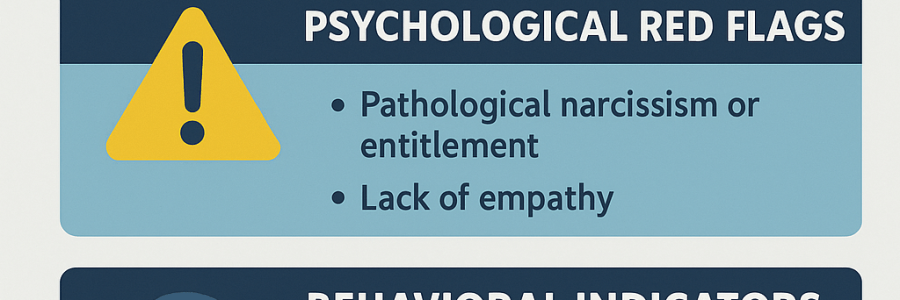
Even when someone seems calm in public, experts can spot warning signs behind closed doors. These signs are subtle and often show up in behavior, speech, or even social media activity. 1. Neuroscience Clues 2. Psychological Red Flags 3. Behavioral Indicators in Interviews 4. Social Media Signals 5. Structured Assessments Psychologists may use validated tools to evaluate risk:… Read More Detecting Hidden Violent Tendencies: What Psychologists Look For

🧠 The Pathological Fusion of Love and Control

Understanding the Neuroscience of Possessive Abuse At first glance, people who commit intimate-partner violence often claim they acted out of love — that they “couldn’t bear to lose” their partner. But psychologists and neuroscientists know that what drives them isn’t love; it’s a pathological fusion of attachment and control — a wiring error deep within the emotional… Read More 🧠 The Pathological Fusion of Love and Control

Consistency and Trustworthiness: The Neuroscience of Betrayal and Repair

Transparency isn’t a single act — it’s a continuous rhythm between intention and behavior. Real trust is built through repetition: words aligning with actions, time after time. From a neuroscience perspective, this consistency literally wires safety into the brain. When someone behaves predictably and truthfully, your nervous system begins to relax. The brain releases oxytocin —… Read More Consistency and Trustworthiness: The Neuroscience of Betrayal and Repair

The Psychology of Self-Deception: Why Living a Lie Leads to Emotional Suffering

Some people spend their lives constructing illusions — pretending, manipulating, performing — and then wonder why they feel hollow, anxious, or lost.Deception may protect the ego for a while, but it eventually corrodes the mind that sustains it.Living a lie isn’t just a moral problem; it’s a neuropsychological burden that keeps the brain and body in constant… Read More The Psychology of Self-Deception: Why Living a Lie Leads to Emotional Suffering

🧠 Neuroscience of Chronic Deception

When someone lives through deceit, manipulation, or chronic inauthenticity, it isn’t just a moral problem — it becomes a nervous system and identity disorder of sorts. Here’s what’s happening beneath the surface: 🧠 Neuroscience of Chronic Deception Lying and deceiving require constant cognitive control — the prefrontal cortex has to suppress truth, rewrite memory, and maintain the story.Over time, this: This… Read More 🧠 Neuroscience of Chronic Deception

🌿 How to Reset Your Nervous System After Mixed Signals

When someone’s words say “I care” but their actions say “I’m gone,” your body doesn’t just feel sad — it becomes confused at a biological level.The nervous system is wired to detect safety or threat, not maybe.Mixed signals keep it swinging between connection and rejection, flooding you with cortisol one moment and craving oxytocin the next.Healing means teaching your brain and body… Read More 🌿 How to Reset Your Nervous System After Mixed Signals

🧠 Neuroscience: What Happens in the Brain

When someone says “let’s stay friends” and then ignores you, your brain experiences a kind of prediction error — what you expect (continued connection) doesn’t match what happens (silence or rejection). This mismatch activates: Your brain had already mapped that person into its social reward circuitry — dopamine, oxytocin, and endorphins reinforced that bond. When they pull away suddenly, your brain… Read More 🧠 Neuroscience: What Happens in the Brain