Why Control-Based Personalities Escalate Sexual Threats

The Neuroscience & Psychology Behind This Behaviour When someone repeatedly escalates sexual threats — suggesting replacement, sexual outsourcing, or access to others — this is not about desire. It is about power regulation. Sex becomes a tool of control, not a form of connection. 1. Control-Based Nervous Systems Fear Vulnerability Healthy intimacy requires: For control-based personalities, vulnerability feels… Read More Why Control-Based Personalities Escalate Sexual Threats

“I’m Better on My Own”

Why People Tell You Early — and Why We Don’t Listen There is a sentence people sometimes offer early in connection: “I’m better on my own.”“I’m not good in relationships.”“I can’t really do commitment.”“I’m not built for emotional closeness.” These are not throwaway lines. They are micro-confessions. Psychology calls this pre-emptive disclosure.Neuroscience calls it threat discharge. It is… Read More “I’m Better on My Own”

The Psychology & Neuroscience of Love-Bombing

What it is, why it works, and what it often predicts Love-bombing is the rapid delivery of intense affection, attention, praise, promises, and emotional closeness early in a relationship. It feels intoxicating, validating, and deeply bonding. But neuroscience shows this isn’t accidental — it is neurochemical manipulation, whether conscious or unconscious. 1. Dopamine & Attachment Hijacking Love-bombing… Read More The Psychology & Neuroscience of Love-Bombing

Can You Stay Friends With Your Ex?

Why It’s Impossible With an Abuser A Trauma-Informed Psychological Perspective In healthy breakups, friendship can sometimes develop.In abusive relationships, friendship is not possible — and attempting it often causes ongoing harm. This is not bitterness.It is psychological reality. 1. Friendship Requires Safety — Abuse Destroys Safety True friendship requires: Abuse destroys all five. An abusive dynamic is… Read More Can You Stay Friends With Your Ex?

A Trauma-Informed Guide to Rebuilding Trust, Connection & Emotional Safety

Divorce changes a man’s nervous system. Even when the separation was necessary, the emotional impact can be profound. Loss, identity disruption, rejection, betrayal, failure, and grief all reshape how the brain approaches intimacy. From a neuroscience and psychological perspective, this shift is not weakness — it is adaptation. 1. What Divorce Does to the Male Nervous… Read More A Trauma-Informed Guide to Rebuilding Trust, Connection & Emotional Safety

A Trauma-Informed Guide to Dating Again After Loss, Divorce, or Long-Term Relationships

Dating in midlife is not the same as dating when you were younger. Your nervous system now carries: This means your body seeks safety before excitement — even if your mind wants connection. From a neuroscience and psychological perspective, this is not hesitation.It is emotional intelligence. 1. The Midlife Nervous System: Why Dating Feels Different Now After… Read More A Trauma-Informed Guide to Dating Again After Loss, Divorce, or Long-Term Relationships

A Trauma-Sensitive Explanation for Survivors

Discovering that a partner has been paying for sex can be profoundly destabilizing. It often triggers shock, grief, rage, confusion, humiliation, betrayal, and deep emotional pain — sometimes all at once. This reaction is not dramatic.It is a normal nervous-system response to relational trauma. Why This Hurts So Deeply This kind of discovery doesn’t just break trust.It fractures… Read More A Trauma-Sensitive Explanation for Survivors

Paying for Sex — Neuroscience & Psychology

Paying for sex is not primarily about sex.From a neuroscience and psychological perspective, it is most often about power, control, emotional safety, attachment wounds, and nervous-system regulation. 1. The Neuroscience: Control Over Connection Healthy sexual intimacy activates: But true intimacy requires emotional vulnerability, which activates deeper brain regions responsible for: For many people, this vulnerability feels unsafe. So… Read More Paying for Sex — Neuroscience & Psychology

Serial Daters Who Target Vulnerable Women With Property — A Neuroscience Perspective

There is a specific dating pattern that rarely gets named, yet many women eventually recognize it only after emotional, psychological, or financial harm has already occurred: Serial daters who actively seek out vulnerable women who have stability, property, or resources. This is not romance.It is strategic attachment. From a neuroscience perspective, this behavior is driven less… Read More Serial Daters Who Target Vulnerable Women With Property — A Neuroscience Perspective

Nervous System Differences

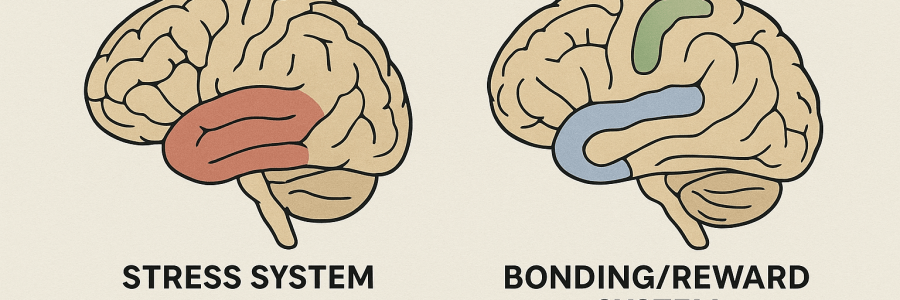
Authentic Bonders vs Emotional Performers 1. Core Nervous System State 🟢 Authentic Bonder Baseline state: Regulation & Safety They operate from: Safety → Connection → Bonding 🔴 Emotional Performer Baseline state: Threat & Survival They operate from: Threat → Strategy → Survival 2. Emotional Experience vs Emotional Simulation 🟢 Authentic Bonder They feel emotions internally first,… Read More Nervous System Differences