Why Chasing Non-Responsive Partners is Unhealthy: A Neuroscience Perspective

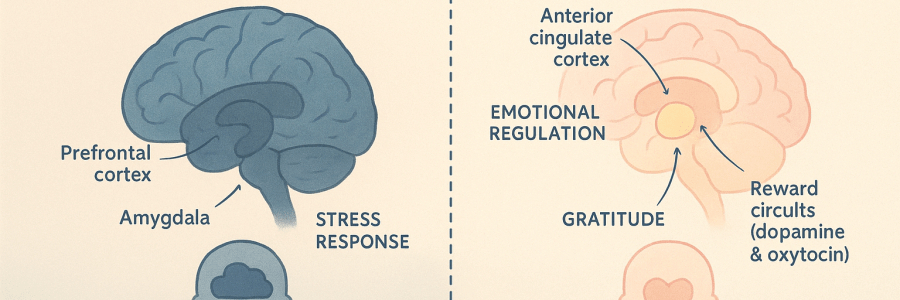
1. The Stress Response and Uncertainty Result: You feel anxious, obsessed, and caught in a loop — waiting for approval or contact. 2. Mirror Neurons and Emotional Empathy 3. The Reward System and Intermittent Reinforcement 4. Prefrontal Cortex vs. Emotional Hijacking 5. Cognitive Patterns That Maintain the Loop These cognitive patterns strengthen neural circuits tied to attachment… Read More Why Chasing Non-Responsive Partners is Unhealthy: A Neuroscience Perspective

Neurochemistry of Secure Couples

1. Key Brain Regions Region Role in Secure Attachment Activation Effects Amygdala Threat detection, fear response Downregulated → reduced anxiety, fear of abandonment Prefrontal Cortex Decision-making, emotional regulation Active → logical problem-solving, calm response to conflict Anterior Cingulate Cortex Social pain, empathy Regulated → enhances empathy, attunement Insula Interoception, emotional awareness Active → reads own… Read More Neurochemistry of Secure Couples

Reframing the Revelation: Transforming Truth into Growth and Freedom

When a hidden truth or secret is revealed, the natural reaction is often shock, anger, or grief. But reframing the experience can transform it from trauma into empowerment, insight, and personal growth. 1. The Gift of Awareness 2. An Opportunity for Growth 3. A Chance to Reclaim Your Life 4. Additional Deep Reframes Truth as a… Read More Reframing the Revelation: Transforming Truth into Growth and Freedom

Sexual Compatibility vs. Emotional Compatibility Matrix

Axes 📊 The 4 Quadrants 🟥 Quadrant 1 — LOW Emotional / LOW Sexual Compatibility “The Draining Relationship” Characteristics Psychology Long-term outcome:❌ Not sustainable. This is where people feel trapped, invisible, or chronically unhappy. 🟧 Quadrant 2 — LOW Emotional / HIGH Sexual Compatibility “The Chemistry Trap” Characteristics Psychology Long-term outcome:⚠️ High drama, low stability.Great… Read More Sexual Compatibility vs. Emotional Compatibility Matrix

Neuroscience Behind Reduced Mirror-Neuron Activity (Expanded)

Reduced mirror-neuron activation doesn’t mean someone is “bad” — it means their brain processes emotional signals differently.Below is a fuller breakdown of how this happens and why. 1. Avoidant Attachment Styles People with avoidant attachment learned early that emotional closeness felt unsafe or overwhelming. Brain mechanisms: Behavioural effects: Avoidance is a protective reflex, not a conscious decision.… Read More Neuroscience Behind Reduced Mirror-Neuron Activity (Expanded)

Mirror Neuron System & Empathy: Why Some People Don’t “Feel” What You Feel

What Are Mirror Neurons? Mirror neurons are brain cells that activate both when you perform an action and when you observe someone else doing it.They also activate when you see: This system helps your brain simulate what another person is experiencing. In simple terms:Mirror neurons are the foundation of natural, automatic empathy. When Mirror Neuron Activity Is Reduced People with reduced… Read More Mirror Neuron System & Empathy: Why Some People Don’t “Feel” What You Feel

Neuroscience Behind People Who Leave You Hanging

1. Avoidant Attachment & Threat Perception People who disappear, delay responses, or keep you waiting often have an avoidant attachment style.To them, closeness feels threatening — their amygdala (fear center) misinterprets emotional intimacy as loss of control or loss of independence. Brain mechanism: So the silence or unpredictability is not deep thinking — it’s avoidance triggered by fear.… Read More Neuroscience Behind People Who Leave You Hanging

Neuroscience and Psychology of Re-Learning Healthy Relationships After Abuse

1. Trauma Rewires the Brain Result: Survivors may feel anxious or mistrustful even in genuinely safe situations. This explains why instinctive judgement about what is “right” or “healthy” in relationships can be impaired. 2. Confusing Safety with Danger 3. Neuroplasticity and Healing Key point: Cognitive understanding (“I know this is safe”) is insufficient; the nervous system must physically… Read More Neuroscience and Psychology of Re-Learning Healthy Relationships After Abuse

Neuroscience and Psychology Behind “Walls” and Letting Go

1. The Closed-Off Partner – Emotional Walls 2. The Persistent Partner – Reaching Out 3. Letting Go – Choosing Yourself 4. Emotional Freedom 5. Love Needs a Home, Not a Fortress Summary When someone “won’t let you in,” their behaviour is often: Letting go is not failure — it is a conscious, adaptive choice to protect your… Read More Neuroscience and Psychology Behind “Walls” and Letting Go

Why They Complain About You “Not Selling the House” While They Keep Removing the For-Sale Signs — Neuroscience + Abuse Dynamics

This is not logical behaviour; it is control-based behaviour.Removing “For Sale” signs while accusing you of blocking the sale is a classic pattern seen in coercive control, pathological insecurity, and individuals who cannot tolerate loss of power. Below is what this behaviour typically means. 1. Cognitive Dissonance (“Two Opposite Beliefs at Once”) The brain cannot reconcile the… Read More Why They Complain About You “Not Selling the House” While They Keep Removing the For-Sale Signs — Neuroscience + Abuse Dynamics