How Secure People Thrive with Secure Partners
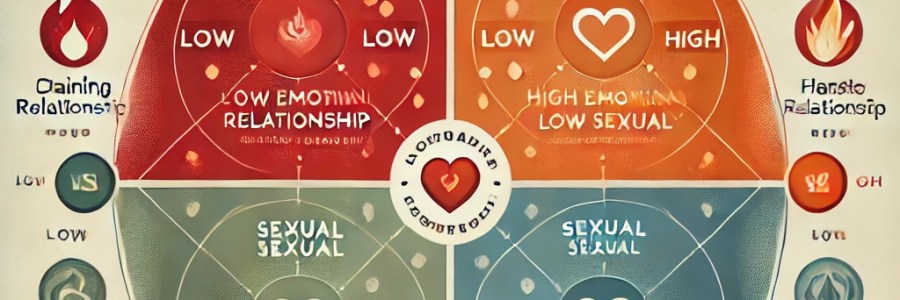
Secure attachment is one of the strongest predictors of healthy, lasting relationships. When a securely attached person pairs with another secure partner, the result is synergy, growth, and fulfillment. 1. Mutual Trust and Safety Result: Confidence in the relationship and comfort in vulnerability. 2. Effective Communication Result: Less stress, more understanding, and deep emotional attunement. 3. Emotional Co-Regulation… Read More How Secure People Thrive with Secure Partners
How Secure People Get Trapped with Insecure or Abusive Partners

Most people assume that secure attachment protects someone from ending up in an unhealthy relationship. And in many cases, it does. But the truth is more complex: Secure people are sometimes MORE vulnerable to getting trapped —precisely because of their strengths. A securely attached person expects honesty, repair, and emotional reciprocity.When they meet someone who is… Read More How Secure People Get Trapped with Insecure or Abusive Partners

Secure Attachment: Benefits vs. Vulnerabilities

💚 The Benefits (These Are Very Strong) Secure attachment creates one of the most resilient emotional foundations a person can have. 1. Higher trust and healthy bonding Securely attached people: This makes relationships smoother, warmer, and more stable. 2. Better emotional regulation Their nervous system is less reactive.They can soothe themselves, communicate calmly, and repair… Read More Secure Attachment: Benefits vs. Vulnerabilities

Neuroscience and Psychology of Re-Learning Healthy Relationships After Abuse

1. Trauma Rewires the Brain Result: Survivors may feel anxious or mistrustful even in genuinely safe situations. This explains why instinctive judgement about what is “right” or “healthy” in relationships can be impaired. 2. Confusing Safety with Danger 3. Neuroplasticity and Healing Key point: Cognitive understanding (“I know this is safe”) is insufficient; the nervous system must physically… Read More Neuroscience and Psychology of Re-Learning Healthy Relationships After Abuse

Minimization and Denial by Family Members

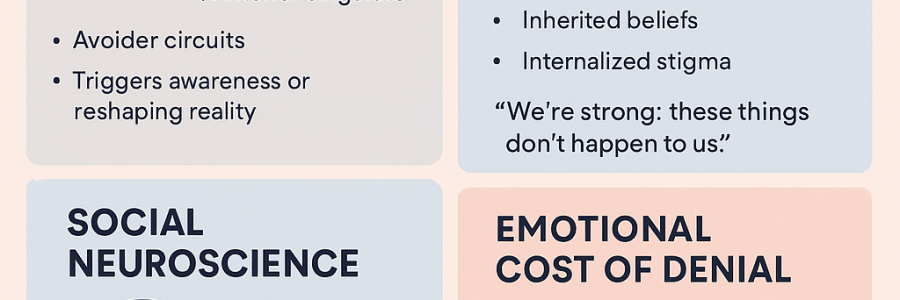
Common psychological phenomenon in families of abuse survivors, and it has both neuroscientific and social-psychological dimensions. Here’s a clear breakdown: 1. Minimization and Denial by Family Members Even if there’s a documented history of serious abuse (e.g., previous wife harmed), they may ignore or dismiss it because acknowledging it would require action or confronting uncomfortable truths.… Read More Minimization and Denial by Family Members

Protecting Yourself After Divorce: A Survivor’s Guide

Even after the divorce is finalized, safety, boundaries, and emotional wellbeing remain top priorities. Survivors of abuse often face ongoing harassment, stalking, or attempts to manipulate outcomes. 1. Legal Protections 2. Technology Safety 3. Personal Safety Planning 4. Emotional and Psychological Protection 5. Ongoing Monitoring and Documentation 6. Rebuilding Autonomy Key Message: Post-divorce safety is about legal… Read More Protecting Yourself After Divorce: A Survivor’s Guide

Why Some People Won’t Commit Until You Are Fully Divorced

1. The Brain Wants “Clean Attachments” — Not Overlapping Ones Many people’s nervous systems cannot tolerate emotional overlap.For them, attachment circuits (oxytocin + dopamine) only activate fully when the situation feels: If you’re still married, their brain reads it as: “Not finished yet = Not safe yet.” Even if emotionally everything is finished. It’s about symbolic closure, not… Read More Why Some People Won’t Commit Until You Are Fully Divorced

Self-Assessment Questions: Am I Co-Dependent?

Here’s a self-reflection guide with questions to help you assess whether you might exhibit co-dependent patterns. These are grounded in psychology and behavioral science. Answer honestly, in a non-judgmental way — this is for self-awareness, not diagnosis. Self-Assessment Questions: Am I Co-Dependent? 1. Relationship Dynamics 2. Emotional Regulation 3. Self-Identity and Self-Worth 4. Patterns in Relationships 5. Boundaries… Read More Self-Assessment Questions: Am I Co-Dependent?

Neuroscience-Informed Trauma Bond Resistance: Overview

Key Concepts / Mechanisms Practical Implications Neurobiology of Trauma Bonds Explains how the brain forms strong attachments even in harmful relationships. – Dopamine system (nucleus accumbens): reward spikes during intermittent affection.– Oxytocin system: strengthens bonding, trust, and attachment.– Amygdala & HPA axis:hyperarousal, fear, and stress responses.– Prefrontal cortex suppression:rational decision-making is reduced during emotional manipulation. – Recognize neurochemical dependence.– Understand physiological… Read More Neuroscience-Informed Trauma Bond Resistance: Overview

Behavioral Indicators

Avoiding or protecting yourself from individuals with dark-triad traits (Machiavellianism, psychopathy, narcissism) or related traits like sadism involves a combination of psychological awareness, boundary-setting, and behavioral strategies. Here’s a thorough, neuroscience-informed guide: 1. Recognize Early Red Flags Behavioral Indicators Psychological Indicators Tip: Keep a mental or written note of repeated patterns rather than dismissing them as one-off incidents. 2.… Read More Behavioral Indicators