Mirror Neuron System & Empathy: Why Some People Don’t “Feel” What You Feel

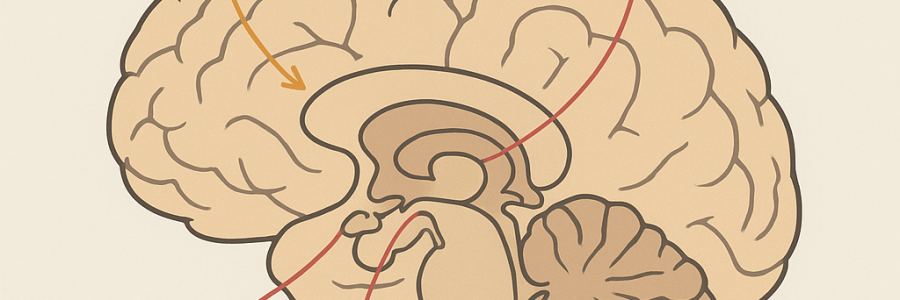
What Are Mirror Neurons? Mirror neurons are brain cells that activate both when you perform an action and when you observe someone else doing it.They also activate when you see: This system helps your brain simulate what another person is experiencing. In simple terms:Mirror neurons are the foundation of natural, automatic empathy. When Mirror Neuron Activity Is Reduced People with reduced… Read More Mirror Neuron System & Empathy: Why Some People Don’t “Feel” What You Feel

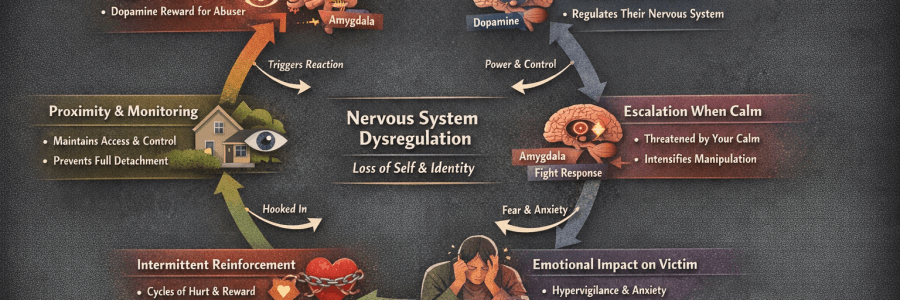
Neural Monopoly: How Abusers Take Over a Victim’s Reality

Neural monopoly is what happens when one person becomes the dominant source of information, emotion, validation, and interpretation inside another person’s mind. In healthy life, your brain gets input from many sources: These inputs compete, balance each other, and help your brain cross-check what’s real. When an abuser isolates you, they slowly shut down all the other “data streams.”Your… Read More Neural Monopoly: How Abusers Take Over a Victim’s Reality

Safe, mutual, and real.

Let’s go much deeper into the neuroscience and psychology behind those three key systems — dopamine (reward/novelty), oxytocin & vasopressin (bonding/trust), and noradrenaline/adrenaline (arousal/memory) — and how together they create the illusion of “instant love” or emotional fusion that manipulators can exploit. This is the scientific anatomy of romantic intoxication — the same circuitry that underlies addiction, attachment, and trauma bonding. 🧠 1.… Read More Safe, mutual, and real.

🧠 1. Social Comparison & Reward Circuits

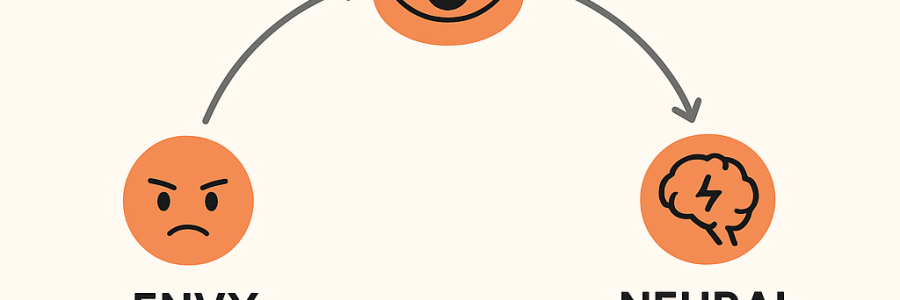
The human brain constantly evaluates relative standing. So, seeing someone else’s abundance can feel like a mini loss in the brain’s reward balance. 💭 2. Symbolic Meaning of Food Food = safety, nurture, and emotional sufficiency. 🧩 3. Psychological Mechanisms at Play Mechanism Description Emotional Outcome Projection They disown their own insecurity and project it onto you (“you’re showing off”)… Read More 🧠 1. Social Comparison & Reward Circuits

🧠 1. Neuroscience: Reward, Power, and Security Circuits

🔹 Dopamine & Reward Prediction The dopamine system (nucleus accumbens, ventral tegmental area) drives us toward perceived reward.For some men, wealth itself becomes a symbolic reinforcer — it activates the same neural reward pathways as social status or sexual attraction. The brain links a wealthy partner with comfort, reduced effort, or higher social rank — triggering dopamine anticipation. This doesn’t… Read More 🧠 1. Neuroscience: Reward, Power, and Security Circuits

🧠 1. The “Better Than the Last One” Trap — Contrast Bias

Your brain doesn’t evaluate people objectively — it evaluates them comparatively.When you’ve had a painful or toxic experience before, your prefrontal cortex and amygdala create a mental “reference point” for safety and danger. So when someone new shows slightly better behavior — a little kindness, a bit of respect — your brain lights up with relief: “Ah, this feels safer. Better. Maybe… Read More 🧠 1. The “Better Than the Last One” Trap — Contrast Bias

🧠 NEUROSCIENCE: HOW THE BRAIN OF A CHRONIC LIAR WORKS

1. Reduced Gray Matter in the Prefrontal Cortex Research using MRI scans (e.g., Yang et al., British Journal of Psychiatry, 2005) found that habitual liars have less gray matter in the prefrontal cortex — the brain’s honesty and moral reasoning hub.👉 This means poorer impulse control, ethical judgment, and empathy regulation. 2. Overactive Reward Circuitry The nucleus accumbens and ventral tegmental area (VTA) — the brain’s reward… Read More 🧠 NEUROSCIENCE: HOW THE BRAIN OF A CHRONIC LIAR WORKS

🧠 Neuroscience & Psychology of Abusive Family Systems

When an entire family becomes abusive — locking you out, controlling finances, stalking, sending threats — this reflects a collective dysfunction of empathy, power, and fear.From both neuroscience and psychology, several key mechanisms explain this: 1. Collective Trauma & Learned Behavior In many abusive families, destructive patterns are learned, repeated, and reinforced over generations. Each family member unconsciously plays… Read More 🧠 Neuroscience & Psychology of Abusive Family Systems

Synaptic Pruning: How the Brain Lets Go to Grow

When we talk about “letting go” emotionally, it often feels abstract — like advice easier said than done. But your brain actually knows how to let go at a biological level. This process is called synaptic pruning, and it’s one of the key ways your brain adapts, learns, and evolves throughout your life. What Is Synaptic Pruning? Your… Read More Synaptic Pruning: How the Brain Lets Go to Grow