The Neuroscience of “I Didn’t See That Coming”

When you suddenly realise who someone really is, your brain goes through a rapid model collapse. You had built an internal prediction model of them: Then suddenly — new data violently contradicts that model. This causes: ⚡ Prediction Error Shock Your brain says: “Reality does not match expectation.” This triggers: That’s why it can feel: 🧠 Cognitive Dissonance… Read More The Neuroscience of “I Didn’t See That Coming”

🧠 Nervous System & Brain Processing

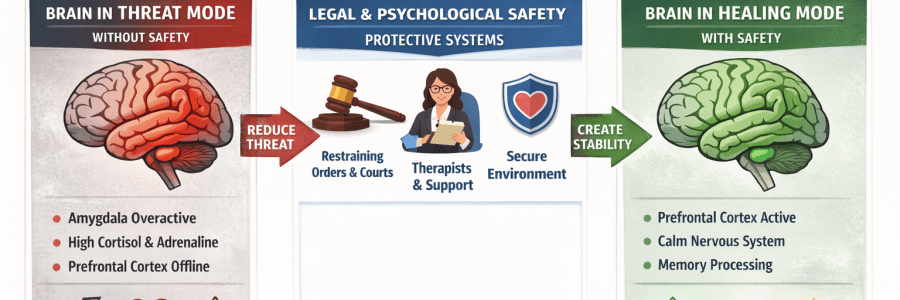
When someone wants a relationship but avoids communication, calls, video, socialising, crowds, and mutual conversation This pattern usually reflects nervous system regulation + attachment + threat processing, not just “personality”. Let’s break it down. 🧠 Nervous System & Brain Processing 1. Chronic Threat Mode (Amygdala Overactivation) Their brain is often stuck in high-alert mode. So their nervous system reacts with:… Read More 🧠 Nervous System & Brain Processing

The big reveal

Sometimes, a situation doesn’t change a person —it reveals them. Pressure doesn’t create character.It exposes it. When someone is confronted with truth, discomfort, or accountability,their response shows you how they handle:stressconflictvulnerabilityresponsibilityemotional safety And while it can be painful to see,clarity is a gift. Because it’s far better to learn who someone truly issooner rather than later. Sooner… Read More The big reveal

Delete, Delete, Delete

Deleting messages isn’t about privacy.It’s about control of the narrative. When someone wipes conversations to hide the truth, it usually means:They know something is wrong.They know it would change how they’re seen.They know it would expose inconsistency, betrayal, or deception. So instead of accountability, they choose erasure. This isn’t forgetfulness.It isn’t protection.It isn’t innocence. It’s intent. Because people… Read More Delete, Delete, Delete

Shadow Work

Carl Jung believed that within every human being lives a shadow —the hidden parts of ourselves we were taught to suppress, deny, or feel ashamed of. Our fear.Our anger.Our grief.Our vulnerability.Our unmet needs.Our pain. These parts don’t disappear.They simply move into the unconscious — where they begin to shape our choices, reactions, and relationships from behind the… Read More Shadow Work

Psychological self-protection.

One of the most painful experiences is being honest — and then being told you’re lying. Not because you lack evidence.Not because your story is unclear.But because the truth is inconvenient for someone else. When you’re accused of making something up, what’s really happening often isn’t doubt —it’s defense. Because accepting the truth would require:• accountability•… Read More Psychological self-protection.

“It’s a Small World” — What Actually Happens After Exposure

When a liar is found out and goes into denial, they usually believe: But modern social reality + human networks make that impossible long-term. Because: 🔹 Social networks overlap Friends, colleagues, family, communities, workplaces, and online circles intersect far more than people realize. Truth doesn’t move in straight lines.It moves through relationships. 🔹 Patterns expose themselves Liars rely… Read More “It’s a Small World” — What Actually Happens After Exposure

Gratitude for the lesson this weekend

Gratitude for clarity is emotional strength.It means you’re no longer trapped in confusion, hope, or self-doubt. Better to see clearly early than slowly lose yourself later. When someone shows their true colours: That’s wisdom. What This Moment Really Represents Not loss.Liberation. Not rejection.Redirection. Not hurt.Insight. A Beautiful Integration Thought “Thank you for the clarity. I choose… Read More Gratitude for the lesson this weekend