What is control?

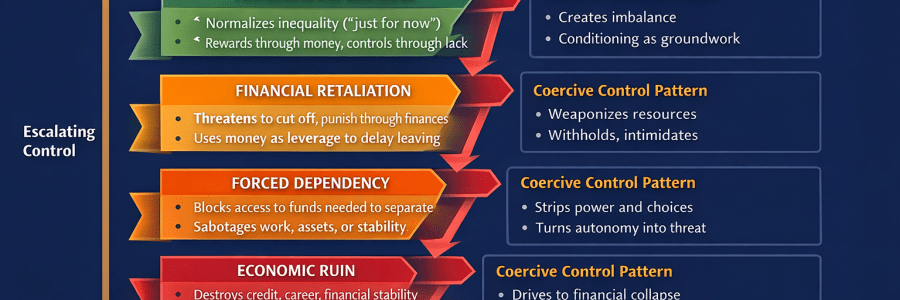
Here’s a clear, grounded definition of control, with concrete real-world examples, especially in the context of abuse, coercive control, and unhealthy power dynamics: What is control? Control is the systematic use of fear, pressure, threat, manipulation, or power to override another person’s autonomy, choices, safety, dignity, or freedom. It is not disagreement.It is domination. Core forms of control 1. Threat-based control… Read More What is control?

When All Past Victims Are “Jealous” or “Liars” — Who Is the Common Denominator?

When someone describes every single past partner, ex, colleague, or friend as: There is a critical psychological question that must be asked: Who is the only consistent factor in all of these relationships? From a neuroscience perspective, this pattern reveals defensive nervous system wiring, not bad luck. 🧠 The Brain’s Threat-Protection System When a person cannot tolerate accountability,… Read More When All Past Victims Are “Jealous” or “Liars” — Who Is the Common Denominator?

Serial Daters Who Target Vulnerable Women With Property — A Neuroscience Perspective

There is a specific dating pattern that rarely gets named, yet many women eventually recognize it only after emotional, psychological, or financial harm has already occurred: Serial daters who actively seek out vulnerable women who have stability, property, or resources. This is not romance.It is strategic attachment. From a neuroscience perspective, this behavior is driven less… Read More Serial Daters Who Target Vulnerable Women With Property — A Neuroscience Perspective

“The only people mad at you for telling the truth are those who are living the lie.”

When someone reacts with anger, threats, or character attacks to simple truth, it usually means: Truth doesn’t need to be defended.It simply reveals. People who are living honestly might feel uncomfortable, embarrassed, or even sad — but they don’t attack. They reflect. They adjust. They grow. But people living a lie often: Because if they don’t, their… Read More “The only people mad at you for telling the truth are those who are living the lie.”

Why Emotionally Intelligent People Trust Too Deeply

1. High Empathy = High Projection Bias Emotionally intelligent people feel deeply, so their brain naturally assumes: “Others feel the way I do.” This is called empathic projection. Your nervous system is wired for: So your brain expects emotional coherence in others. But not all nervous systems are wired that way. This creates: over-trust based on internal truth,… Read More Why Emotionally Intelligent People Trust Too Deeply

Why Some People Have an Internal Radar for Bad Vibes

1. The Brain Is a Pattern-Recognition Machine Your nervous system is constantly scanning for: This processing happens below conscious awareness. So people don’t think: “Something is wrong.” They feel: “Something feels off.” That’s the limbic system detecting inconsistency. 2. Trauma-Trained Nervous Systems Detect Faster People who have: often develop hyper-accurate threat perception. Their brains learned: Detect danger early or suffer… Read More Why Some People Have an Internal Radar for Bad Vibes

Nervous System Differences

Authentic Bonders vs Emotional Performers 1. Core Nervous System State 🟢 Authentic Bonder Baseline state: Regulation & Safety They operate from: Safety → Connection → Bonding 🔴 Emotional Performer Baseline state: Threat & Survival They operate from: Threat → Strategy → Survival 2. Emotional Experience vs Emotional Simulation 🟢 Authentic Bonder They feel emotions internally first,… Read More Nervous System Differences

Why Some People Create Convincing Emotional Masks

(Especially When Desperate for Money & Lifestyle) 1. Survival Brain Overrides Moral Brain When someone is financially desperate, the brain shifts into survival mode. This activates: In survival mode: Short-term survival > long-term ethics So the brain prioritizes: Not authenticity. This is not conscious evil.It’s biological threat adaptation. 2. Dopamine Hijacking: Lifestyle = Reward Addiction Luxury, comfort, validation,… Read More Why Some People Create Convincing Emotional Masks