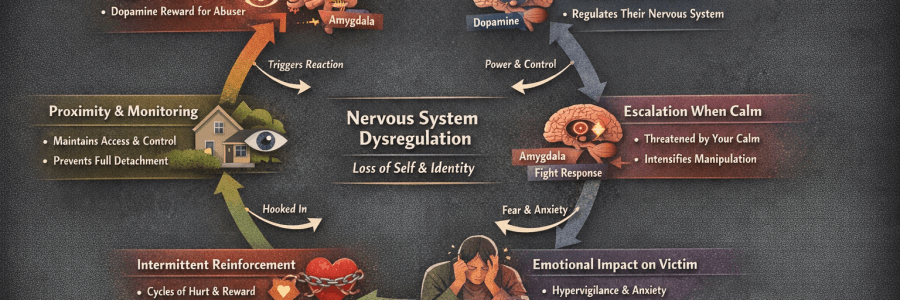
Dating Safely After Emotional Abuse

1. Heal Before You Attach Not because you’re broken — but because trauma distorts perception, attachment, and intuition. Healing helps you: You don’t attract healthier partners — you recognise them. 2. Go Slow (This Is Non-Negotiable) Healthy connection develops gradually. 🚩 Red flag: 🌿 Green flag: Fast intensity = emotional danger after trauma. 3. Observe Behavior, Not Words… Read More Dating Safely After Emotional Abuse

Healthy vs Unhealthy Attachment Styles

✅ Secure Attachment (Healthy) Core belief: “I am worthy of love, and others can be trusted.” How it looks: Feels like: This is the goal after healing. ⚠️ Unhealthy Attachment Styles (Trauma-Based) These develop from inconsistent care, emotional neglect, abandonment, or abuse. 1️⃣ Anxious Attachment Core fear: “I’ll be abandoned.” How it looks: Feels like: Common after emotional… Read More Healthy vs Unhealthy Attachment Styles

How to Build Healthy Future Relationships (After Abuse)

1. Heal First — Don’t Skip This Step Not because you’re broken — but because trauma changes how we attach, trust, and choose. Healing helps you: You don’t attract better — you recognise better. 2. Learn the Difference: Familiar vs Healthy After abuse, chaos can feel familiar and calm can feel strange. Healthy love feels: Unhealthy love feels: Peace is… Read More How to Build Healthy Future Relationships (After Abuse)

Being in the here and now + trusting divine timing = emotional freedom.

When you shift into presence, your nervous system settles. The brain steps out of threat-mode, and your body finally feels safe. Neuroscience shows that mindful presence activates the prefrontal cortex and calms the amygdala, allowing clarity, peace, and emotional balance to return. And faith — whether spiritual, intuitive, or simply deep trust in life — gives meaning to… Read More Being in the here and now + trusting divine timing = emotional freedom.

Briefcase of Secrets

Neuroscience and psychology show that when someone spends decades “carrying a locked briefcase of secrets” — grudges, manipulations, resentments — their brain literally becomes wired to maintain it. It’s a heavy cognitive and emotional load: From a neuroscience perspective, the neural circuits for threat, control, and reward for manipulation strengthen over time, making it increasingly hard to “unlock… Read More Briefcase of Secrets

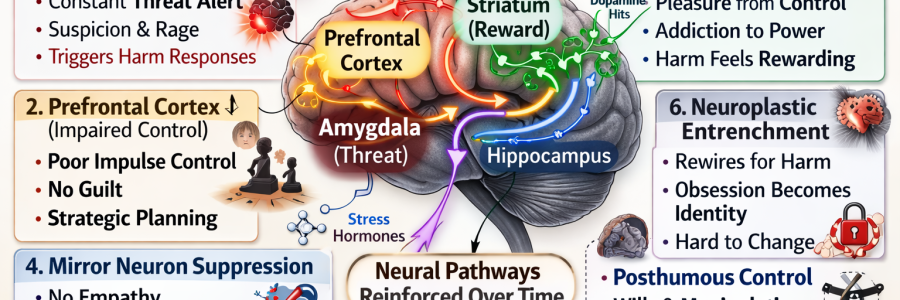
Neuroscience of a Lifelong Obsession with Harm

1. Hyperactive Threat Circuits 2. Prefrontal Cortex Dysfunction 3. Reinforced Reward Pathways 4. Mirror Neuron Suppression 5. Neuroplastic Entrenchment 6. Stress and Cortisol Loop 7. Death and Posthumous Influence 💡 Summary Insight:A person who obsesses over harming others develops a brain wired for control, vigilance, and manipulation. Empathy circuits weaken, reward pathways reinforce harm, and stress systems… Read More Neuroscience of a Lifelong Obsession with Harm