Shadow Work

Carl Jung believed that within every human being lives a shadow —the hidden parts of ourselves we were taught to suppress, deny, or feel ashamed of. Our fear.Our anger.Our grief.Our vulnerability.Our unmet needs.Our pain. These parts don’t disappear.They simply move into the unconscious — where they begin to shape our choices, reactions, and relationships from behind the… Read More Shadow Work

Psychological self-protection.

One of the most painful experiences is being honest — and then being told you’re lying. Not because you lack evidence.Not because your story is unclear.But because the truth is inconvenient for someone else. When you’re accused of making something up, what’s really happening often isn’t doubt —it’s defense. Because accepting the truth would require:• accountability•… Read More Psychological self-protection.

“It’s a Small World” — What Actually Happens After Exposure

When a liar is found out and goes into denial, they usually believe: But modern social reality + human networks make that impossible long-term. Because: 🔹 Social networks overlap Friends, colleagues, family, communities, workplaces, and online circles intersect far more than people realize. Truth doesn’t move in straight lines.It moves through relationships. 🔹 Patterns expose themselves Liars rely… Read More “It’s a Small World” — What Actually Happens After Exposure

Gratitude for the lesson this weekend

Gratitude for clarity is emotional strength.It means you’re no longer trapped in confusion, hope, or self-doubt. Better to see clearly early than slowly lose yourself later. When someone shows their true colours: That’s wisdom. What This Moment Really Represents Not loss.Liberation. Not rejection.Redirection. Not hurt.Insight. A Beautiful Integration Thought “Thank you for the clarity. I choose… Read More Gratitude for the lesson this weekend

Healthy Conflict vs Coercive Control: Real-Time Nervous System Chart

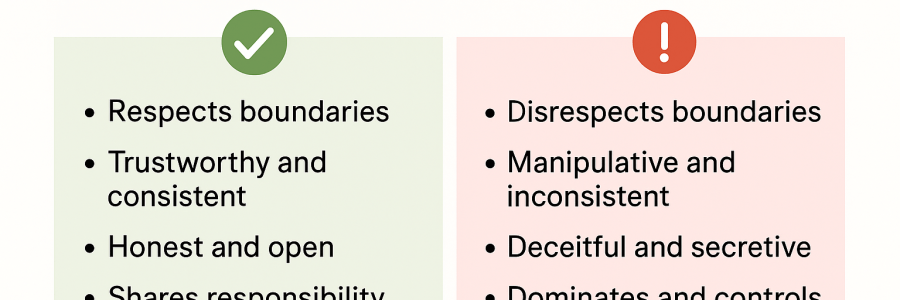
Aspect Healthy Conflict Coercive Control Nervous System Cues Recommended Response Goal / Intention Solve problem, mutual understanding Dominate, intimidate, silence Calm or alert, but not panicked Stay grounded, identify intention Communication Style Calm, clear, direct Threatening, accusatory, manipulative Your chest may feel tight, heart rate rises Pause, breathe, don’t engage emotionally Respect for Boundaries Checks… Read More Healthy Conflict vs Coercive Control: Real-Time Nervous System Chart

Healthy Conflict vs Coercive Control

Feature Healthy Conflict Coercive Control Primary Goal Solve a problem, improve understanding, strengthen the relationship Dominate, manipulate, or silence the other person Communication Style Direct, calm, honest, focused on behavior Threatening, accusatory, manipulative, gaslighting Respect for Boundaries Maintains mutual boundaries, asks consent to discuss sensitive topics Ignores, pushes, or violates boundaries Response to Truth /… Read More Healthy Conflict vs Coercive Control

Using Threats to Evade the Truth and Silence Someone

(What’s really happening) When someone responds to truth, evidence, or accountability with threats, this is not strength, confidence, or power. It is fear-based control. The Core Dynamic When confronted with truth, a psychologically healthy person may feel: But they stay in dialogue. When someone instead threatens, it means: Their nervous system cannot tolerate exposure, so they reach for power.… Read More Using Threats to Evade the Truth and Silence Someone

How to Break the Cycle in Your Relationships

The goal: stop repeating learned patterns, reclaim emotional safety, and build authentic connections. 1. Recognize the Pattern First Before you can change anything, you must identify it. Signs you may be repeating poisonous pedagogy dynamics: Step: Write down recurring relational patterns you notice in yourself and others. 2. Re-parent Yourself Miller emphasizes self-compassion and self-validation as healing tools. Daily Practices:… Read More How to Break the Cycle in Your Relationships